
Postpartum Nanny vs Doula: What’s the Difference (and Which Should You Hire?)
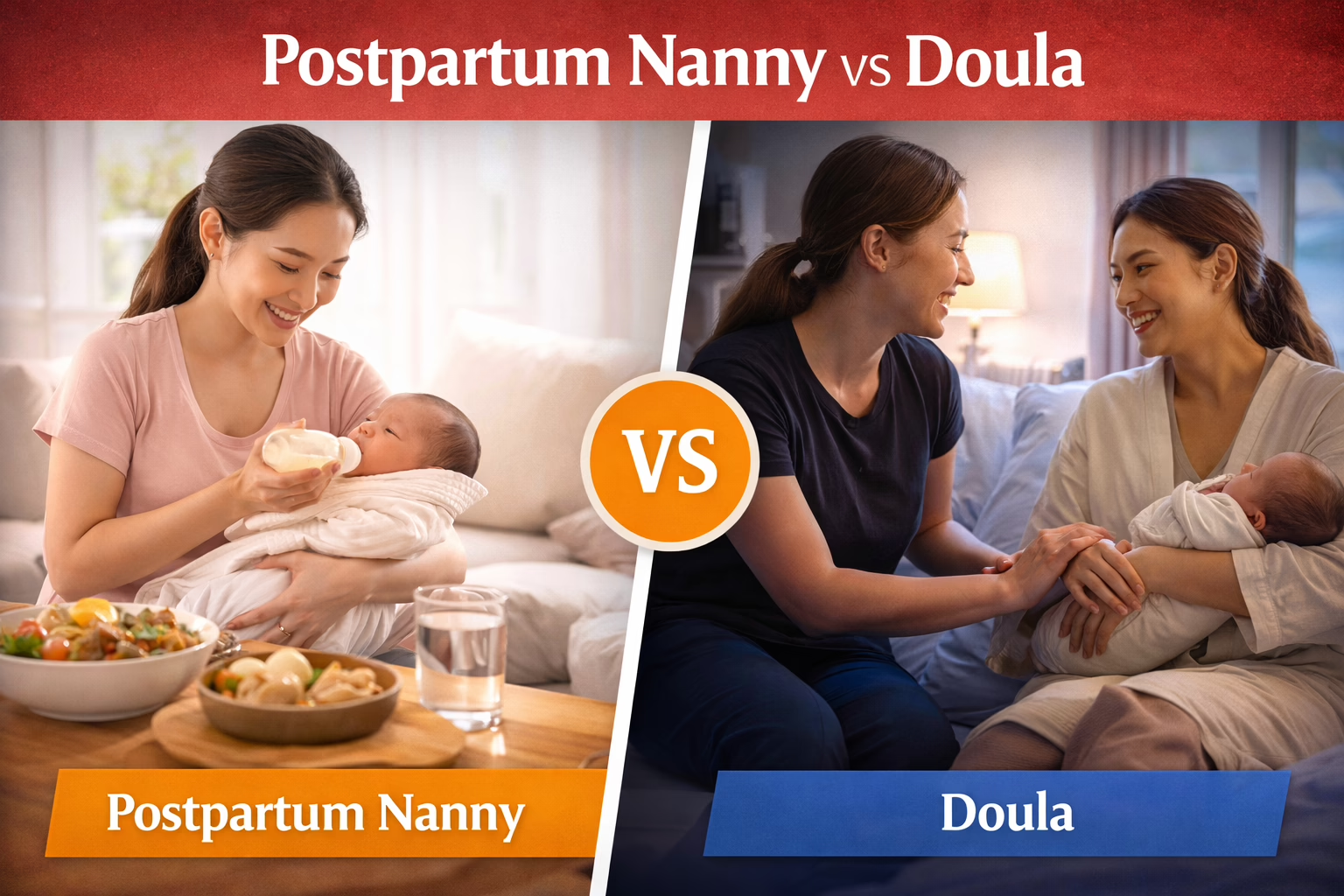
TL;DR: A postpartum doula is primarily focused on education, emotional support, and parent confidence (non-medical), while a postpartum nanny focuses on hands-on newborn care (often including overnight help) plus support that protects the mother’s recovery. If you want practical baby care coverage so parents can sleep and recover, a postpartum nanny is usually the best fit. If you want coaching + emotional support and already have childcare coverage, a doula may be ideal.
Families often search “doula vs postpartum nanny” because both roles show up after birth—but they solve different problems. This guide explains scope, boundaries, what’s included, and how to choose.
← Back to the Postpartum Care Comparisons hub
Postpartum Nanny FAQ →
Quick Definitions
- Birth Doula: Support during pregnancy/labor/birth (non-medical), often focused on comfort measures, advocacy, and preparation.
- Postpartum Doula: Support after birth (non-medical), focused on education, emotional support, recovery guidance, and helping parents adjust.
- Postpartum Nanny: Hands-on newborn care support after birth—often live-in or extended coverage—with a focus on protecting rest, building routines, and helping the household function.
Important: Training, scope, and titles vary by provider and region. Always confirm what a specific caregiver includes.
Doula Scope Boundaries (Non-Medical Support)
This is one of the most important distinctions. Doulas are typically non-medical support professionals. They can be incredibly helpful—but they are not the same as a licensed medical provider.
What postpartum doulas commonly do:
- Emotional support and reassurance
- Education (newborn basics, recovery expectations, feeding support guidance)
- Practical support (light tidying, helping parents set up routines)
- Resources and referrals (lactation consultants, pediatric questions to ask, etc.)
What doulas typically do NOT do:
- Medical diagnosis, treatment, or clinical decision-making
- Replacing professional medical care (OB, pediatrician, nurse, IBCLC)
- Guaranteed 24/7 newborn care coverage unless explicitly contracted and appropriate
If your primary need is hands-on newborn care coverage so you can rest, that’s usually a postpartum nanny solution.
Birth Doula vs Postpartum Doula vs Postpartum Nanny
| Role | When | Main Focus | Best For |
|---|---|---|---|
| Birth Doula | Pregnancy + labor | Comfort measures, advocacy support, preparation | Labor coaching + birth support |
| Postpartum Doula | After birth | Education + emotional support (non-medical) | Confidence, coping, transition support |
| Postpartum Nanny | After birth | Hands-on newborn care + recovery support | Coverage + rest + routine building |
Best For (Fast Decision Table)
| Need | Postpartum Doula | Postpartum Nanny |
|---|---|---|
| Hands-on newborn care coverage | ⚠ Sometimes | ✅ Yes |
| Overnight newborn support | ⚠ Sometimes | ✅ Common |
| Education + emotional support | ✅ Core focus | ✅ Included (but not the main focus) |
| Recovery structure & rest protection | ✅ Helpful | ✅ Core focus |
| Routine building (day-to-night) | ✅ Coaching | ✅ Coaching + implementation |
| Meal support (optional) | ⚠ Varies | ✅ May be included depending on plan |
What Families Get Wrong (and How to Avoid It)
- Hiring a doula when what they really need is coverage. If you need someone to handle newborn care so you can sleep, postpartum nanny is usually better.
- Assuming all doulas provide overnight care. Some do; many don’t. Confirm schedule and scope.
- Expecting medical care from a doula. Doulas are typically non-medical; they can guide and refer but not replace clinical support.
- Not matching support to feeding goals. Breastfeeding vs bottle feeding affects what “help” looks like—especially overnight.
- Not planning the handoff. Families often benefit from doula support early + postpartum nanny coverage during the most intense weeks.
When Families Need Both (The Best “Combo” Setup)
Many families get the best result by combining both roles:
- Postpartum doula helps parents feel calm, educated, and confident (especially for first-time families)
- Postpartum nanny provides the practical coverage—newborn care (often including nights), recovery support, and routine building
Common pairing examples:
- Week 1–2: Doula for emotional support + feeding education + transition planning
- Week 1–6: Postpartum nanny for coverage, rest, and day-to-night routine support
- Week 6+: Transition into longer-term nanny support if ongoing childcare is needed
Cost Expectations (Ranges + What Drives Cost)
Costs vary by region, schedule, and experience. Compare based on scope:
- Postpartum doula: Often priced by hourly blocks; scope centers on education and non-medical support.
- Postpartum nanny: Often structured as a daily rate for extended coverage (commonly live-in), with newborn care as the core service.
What drives cost up: overnight coverage, twins, special feeding needs, urgent timelines, and peak due-date seasons.
Helpful planning tools:
Postpartum nanny costs ·
Postpartum care cost calculator
Decision Guide: Choose the Right Option
Choose a Postpartum Doula if…
- You want education + emotional support and feel okay on hands-on baby coverage
- You want help building confidence and a postpartum plan
- You already have strong family support or childcare coverage
- You want someone to help you adjust, not necessarily to “take over” newborn care
Choose a Postpartum Nanny if…
- You want hands-on newborn care coverage (often including overnight support)
- You want protected rest and a smoother recovery window
- You want help building routines through practice, not just coaching
- You want a more structured support plan during the most intense weeks after birth
Overnight-focused? Learn more here: Night Nurse / Overnight Newborn Care
Simple rule: If you need coverage, postpartum nanny. If you need coaching + emotional support, postpartum doula. If you want the best of both, many families combine them.
Frequently Asked Questions
Is a postpartum doula the same as a postpartum nanny?
No. While both support families after birth, their roles are fundamentally different.
A postpartum doula primarily provides non-medical emotional support, education, and guidance. This includes helping parents understand newborn behavior, offering reassurance, and providing recovery tips. They focus on confidence-building and transition support.
A postpartum nanny provides hands-on newborn care coverage. This typically includes feeding, soothing, diapering, safe sleep supervision, and often overnight care so parents can rest and recover. Postpartum nannies are structured around daily routines and practical caregiving.
Families who need real coverage and rest protection usually choose a postpartum nanny. Families who want education and emotional reassurance may choose a doula.
Do postpartum doulas provide overnight newborn care?
Some postpartum doulas offer overnight services, but this varies significantly by provider and training.
Many doulas focus on education and emotional support rather than taking full responsibility for newborn care through the night. Families should always clarify:
- Whether the doula handles feedings and diaper changes
- If the doula is responsible for soothing the baby back to sleep
- How many consecutive overnight hours are covered
- Whether overnight care is included or billed separately
Postpartum nannies, by contrast, are commonly hired specifically for overnight newborn care and recovery protection.
Do postpartum doulas provide medical care?
No. Postpartum doulas are typically non-medical support professionals.
They do not diagnose conditions, prescribe treatments, or replace licensed healthcare providers such as OBs, pediatricians, or lactation consultants (IBCLCs).
Experienced doulas can:
- Recognize warning signs that require medical attention
- Encourage families to seek professional care when needed
- Help parents prepare questions for their doctors
All medical decisions should always be handled by licensed professionals.
Can a postpartum nanny provide emotional support too?
Yes. Most postpartum nannies naturally provide emotional reassurance and practical guidance because they work closely with families during an intense transition period.
However, their primary role is hands-on newborn care and recovery support rather than counseling or coaching.
Many families report that the emotional benefit of having a postpartum nanny comes from:
- Knowing their baby is safely cared for
- Getting uninterrupted sleep
- Feeling less overwhelmed by daily routines
This indirect emotional relief is often just as valuable as formal coaching.
Which is better for first-time parents: postpartum nanny or doula?
It depends on what kind of support the family needs most.
First-time parents who feel anxious and want education, reassurance, and feeding guidance often benefit from a postpartum doula.
First-time parents who feel physically exhausted and need practical newborn care coverage usually benefit more from a postpartum nanny.
Many first-time families choose a combination:
- A doula for education and emotional confidence
- A postpartum nanny for overnight care and recovery protection
This approach provides both knowledge and rest during the most demanding weeks.
When do families need both a postpartum doula and a postpartum nanny?
Families often use both roles when they want comprehensive postpartum support.
This is common in situations such as:
- First-time parents with limited family support
- Recovery after a C-section or difficult birth
- Families with twins or high sleep deprivation
- Parents returning to work early
A common setup is:
- Weeks 1–2: Doula support for education and emotional adjustment
- Weeks 1–6: Postpartum nanny for hands-on newborn care and routine building
This layered approach allows families to feel supported emotionally while still protecting sleep and physical recovery.
Which option is better for protecting a mother’s recovery?
A postpartum nanny is usually better for protecting recovery because the role is built around practical coverage.
This includes:
- Handling feedings and diaper changes
- Managing overnight newborn care
- Allowing the mother to sleep uninterrupted
- Reducing physical strain during healing
While doulas offer emotional encouragement, postpartum nannies actively remove workload from the parents, which is often the most important factor in recovery.
Ready to Get the Right Postpartum Support?
If you want mom + baby coverage, postpartum nanny care is usually the best match. If you want education + emotional support, postpartum doula support can be a great fit. If you’re unsure, we’ll help you decide based on your due date, location, feeding preference, and family support.
Fill out the Family Registration Form →
Call: (626) 537-1191
M–F 9am–5pm, Sat 10am–4pm PST