产后保姆 波士顿 马萨诸塞州

为波士顿和大波士顿地区的家庭提供具有文化基础的产后恢复护理。自 2011 年以来,我们在全国范围内安排了经过审核的讲普通话和广东话的产后保姆。

背景调查和审查

为 1,000+ 个家庭提供服务

自 2011 年起

🛡 Full-Booking Guarantee

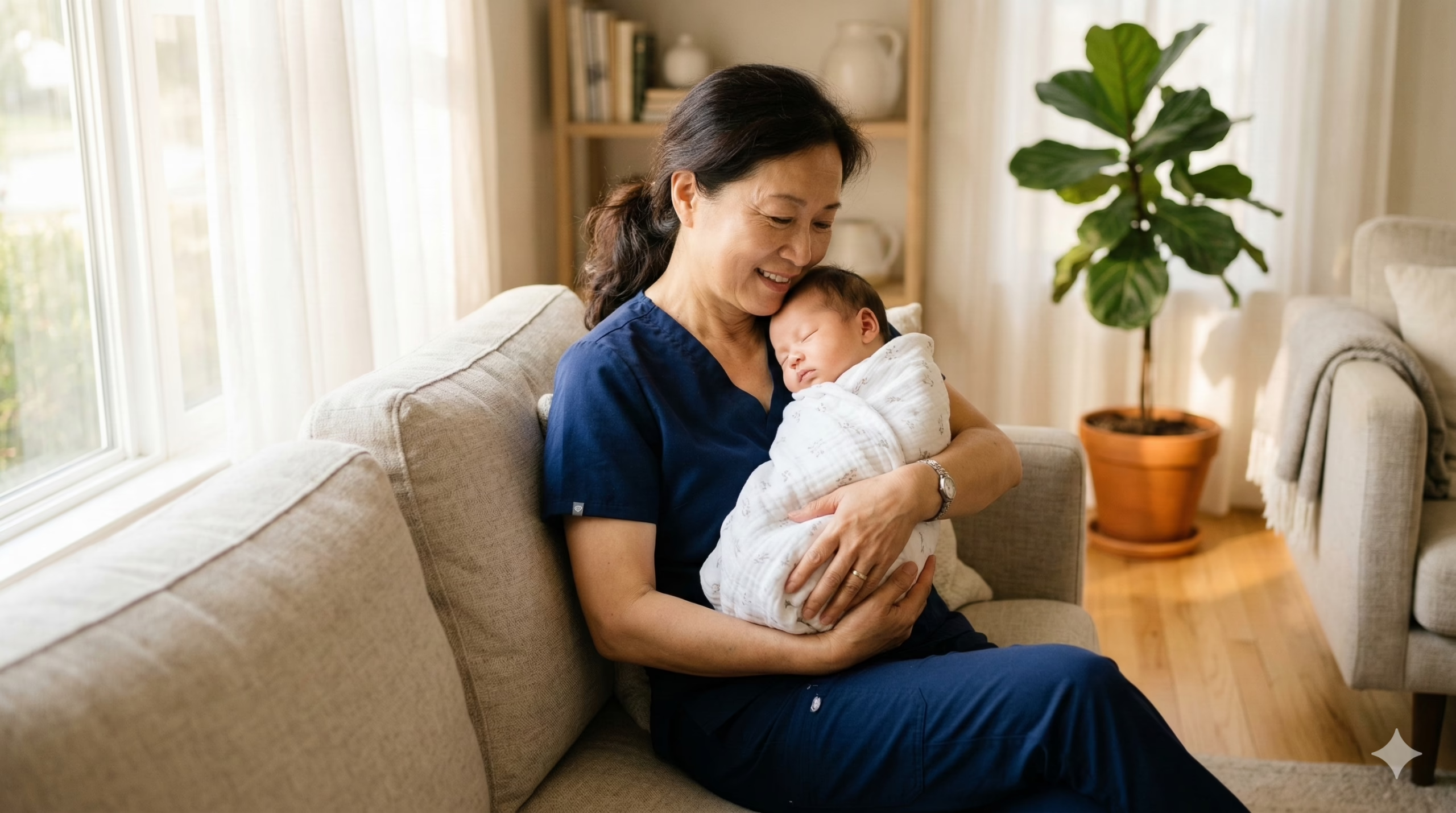
Postpartum nanny caring for newborn in Boston MA home
A postpartum nanny provides culturally grounded confinement care for new families in Boston and Greater Boston.

What Is a Postpartum Confinement Nanny?

A confinement nanny — called a yue sao (月媽) in Chinese — is a trained live-in caregiver who supports mothers through zuo yue zi (坐月子), the structured postpartum recovery period rooted in centuries of Chinese medical tradition. She manages overnight newborn care, prepares traditional healing meals, and guides physical recovery so new mothers heal fully while their families adjust to life with a newborn.


Why Boston Families Choose Zuo Yue Zi Care

Boston stands apart as one of the densest concentrations of world-class hospitals, research universities, and biotech employers in the United States — and the city’s Chinese-American community has deep roots here. Boston’s Chinatown remains one of the last intact Chinatowns on the East Coast, anchoring a broader Asian-American population that stretches from the triple-deckers of Allston-Brighton through the brownstones of Back Bay and into the new towers of the Seaport District. For families who grew up observing zuo yue zi traditions or who learned about confinement care from their own mothers overseas, finding a qualified yue sao in Boston is not a luxury — it is a continuation of generational practice in a city that demands it.

The practical case is just as compelling. New England winters run from late October through April, bringing sub-freezing temperatures, ice storms, and months of limited outdoor mobility. For a mother recovering from childbirth, navigating snowbanked sidewalks with a stroller or driving icy roads to a pediatrician appointment creates unnecessary physical strain and genuine safety risk. A live-in postpartum nanny eliminates that burden entirely. She manages every feed, every diaper change, and every middle-of-the-night soothing session inside your heated home while you recover according to traditional principles that prioritize warmth, rest, and nourishment.

My Asian Nanny already serves families across the Northeast, including placements in the New York metro and Stamford, CT. Adding Boston strengthens our coverage along the I-95 corridor and brings our service directly to one of the nation’s most concentrated populations of Asian-American professionals. Browse all of our service areas to see where we place nannies nationwide.


How We Place Nannies in Boston

1

ConsultationShare your due date, language preferences (Mandarin, Cantonese, or bilingual English), dietary traditions, and household expectations. This conversation shapes every candidate recommendation and ensures your nanny aligns with your family’s cultural background.

2

MatchingWe review our nationwide roster of vetted postpartum caregivers through our detailed process and select candidates whose experience, language fluency, and temperament align with your family. Our California base gives us access to the largest pool of qualified yue sao in the country — a critical advantage for Boston families, where local supply is limited relative to demand.

3

Interview
You speak directly with each candidate via video call. Ask about her care philosophy, her experience with newborns and breastfeeding support, and how she handles specific scenarios like colic, latching difficulties, or sleep regression. We facilitate the conversation in your preferred language.

4

PlacementOnce you select your nanny, she travels to your Boston home and lives in for the full engagement. We time her arrival to your discharge from Brigham and Women’s, Mass General, or whichever hospital you deliver at. Every placement is backed by our replacement guarantee — if the fit is not right, we rematch at no additional referral fee.

Learn more about us, review our placement process, and visit our FAQ page for additional details.


Our Postpartum & Confinement Services

When you hire a confinement nanny through My Asian Nanny, your family receives comprehensive care organized around four service pillars — each adapted to the rhythms, climate, and infrastructure of life in Boston.

24/7 Live-In Confinement Care (Yue Sao)

Your nanny moves into your Back Bay brownstone, Beacon Hill walk-up, South End rowhouse, or Seaport high-rise and stays for the full recovery period — typically 26 or 40 days, with extended 60-day and 90-day placements available for cesarean deliveries or families who want longer coverage. Boston’s housing stock varies dramatically by neighborhood, and our nannies adapt accordingly. In tight Beacon Hill quarters she organizes the nursery for maximum efficiency. In a spacious Brookline Colonial she establishes dedicated zones for feeding, sleeping, and meal prep. The constant is round-the-clock presence: she handles every overnight feed, maintains consistent sleep-wake rhythms, and keeps your newborn bathed, swaddled, and settled so you can focus entirely on healing. For dual-income families in the biotech corridor — where both parents may hold demanding roles at Moderna, Biogen, or Mass General Brigham — a full-time live-in nanny provides the continuity that fragmented outside help cannot replicate.

Chinese Postpartum Nutrition & Meal Planning

Every confinement meal follows Traditional Chinese Medicine principles calibrated to your specific recovery stage. Your nanny sources fresh ingredients from the Asian grocery network Boston is fortunate to have: Super 88 and Hong Kong Supermarket in Allston for produce and dried medicinal herbs, CMart in Chinatown for specialty proteins and fermented condiments, and H Mart in Burlington or Cambridge for Korean and pan-Asian staples. She prepares three balanced meals and two to three restorative soups daily — slow-simmered pork knuckle and peanut broths for milk production, red date and longan tonics for blood replenishment, ginger-sesame chicken for warming the body during Boston’s long winters, and black vinegar pig’s feet that Cantonese families in Chinatown have passed down for generations. Each recipe shifts as your body heals, intensifying warming ingredients during the first two weeks and gradually reintroducing lighter fare as your energy returns. If your household follows Taiwanese, Shanghainese, or Fujianese food traditions, she adjusts her approach accordingly.

Newborn Night Care & Parental Rest Support

Boston’s professional landscape creates unique return-to-work pressures. Researchers at Harvard and MIT operate on grant deadlines that do not pause for parental leave. Clinicians at Brigham and Women’s or Mass General rotate back onto hospital shifts within weeks of delivery. Biotech scientists at Kendall Square startups face product timelines that move regardless of family milestones. In every case, the parent returning to work needs restorative sleep — not the two-hour fragments that unassisted nighttime newborn care produces. Your confinement nanny takes full ownership of overnight feeds, diaper changes, burping, and soothing from evening through dawn. She tracks feeding volumes, monitors wet and soiled diaper counts, and documents emerging patterns so she can establish predictable sleep routines early. The result: parents who commute via the Red Line to Kendall Square, the Green Line to Longwood Medical Area, or drive the Mass Pike to suburban offices arrive at work functional and focused rather than depleted.

Postpartum Wellness & Lactation Guidance

Recovering from childbirth in Boston means navigating a climate that reinforces the very principles zuo yue zi was built around — staying warm, avoiding wind exposure, and conserving physical energy. From late October through April, sub-freezing temperatures and icy sidewalks make outings impractical, and the abbreviated daylight between November and March compounds fatigue for every new parent. Your confinement nanny turns your home into a dedicated recovery environment where every element supports healing. She monitors your lactation progression from colostrum through mature milk supply, coaching positioning adjustments and latch refinements specific to your anatomy and your baby’s feeding patterns. Circulation and tissue repair receive equal attention: she wraps your abdomen using traditional binding methods adapted to whether you delivered vaginally or by cesarean, applies warming compresses infused with ginger or mugwort to promote blood flow, and introduces incremental stretching routines calibrated to your energy level each day. Boston families benefit from access to Brigham and Women’s Hospital, Massachusetts General Hospital, Beth Israel Deaconess, and Tufts Medical Center — all of which provide detailed postpartum discharge protocols. Your nanny reads and follows these instructions, ensuring consistency between clinical recommendations and the traditional care she delivers at home. She tracks your temperature, energy levels, and emotional state daily, escalating any concerns — signs of infection, hemorrhage, or mood disturbance — directly to you so your provider can intervene early.

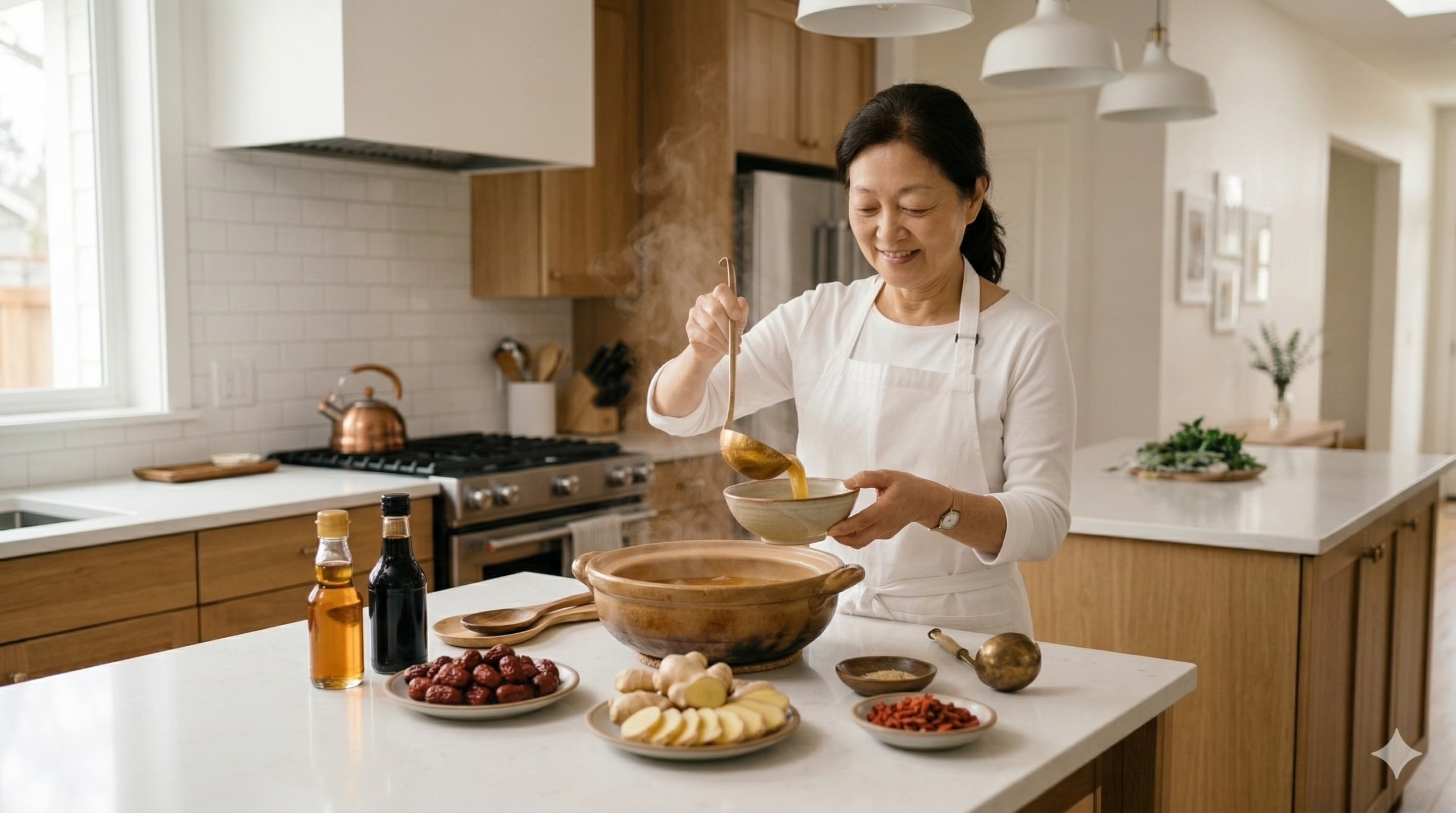
Postpartum nanny preparing traditional confinement meals in Boston Massachusetts
Traditional postpartum meal preparation and dedicated newborn care form the foundation of confinement nanny services in Boston.

Your Boston Postpartum Nanny Starts Here

Vetted bilingual confinement caregivers ready for placement across Back Bay, Beacon Hill, the Seaport, and Greater Boston.

Get Matched Today →

Background-checked · Replacement guarantee · Nationwide placement since 2011

Serving Boston, Back Bay & Greater Boston

We place postpartum nannies throughout Boston and the surrounding communities, serving families in Back Bay, Beacon Hill, the South End, Chinatown, Allston-Brighton, Jamaica Plain, Dorchester, South Boston, and the Seaport/Innovation District. Our coverage extends into Brookline, Cambridge, Somerville, and the suburban communities along the commuter rail corridors. Your nanny lives in your home, so proximity to our California headquarters is never a factor.

Most Boston families deliver at Brigham and Women’s Hospital, Massachusetts General Hospital, Beth Israel Deaconess Medical Center, Tufts Medical Center, or Boston Medical Center. We coordinate placement timing around your expected delivery date and hospital discharge schedule so your nanny arrives when you need her — whether that is a planned induction or a last-minute call.

Boston’s Asian grocery infrastructure supports authentic confinement meal preparation without compromise. Your nanny can source traditional herbs and fresh ingredients at Super 88 in Allston, CMart in Chinatown, or H Mart in Burlington and Cambridge. If you have family or colleagues in the New York metro, our Manhattan and Great Neck, NY pages cover the tri-state region. We also serve tech-corridor families in Bellevue, WA and along the Stamford, CT corridor. Browse all service areas nationwide.


FAQs — Postpartum Nanny Services in Boston

What factors affect postpartum nanny pricing in Boston?

Pricing for a Boston postpartum nanny depends on several interacting factors. Your nanny’s years of experience is the primary driver — a yue sao with fifteen or more years of confinement care commands higher rates than one with five years. Language fluency also matters: caregivers fluent in both Mandarin and Cantonese, or those with strong English for communicating with pediatricians at Boston Children’s Hospital, may carry a premium. Placement duration affects daily rate inversely — a 60-day booking typically costs less per day than a 26-day engagement. Seasonal demand in Boston peaks between September and February, when New England winter conditions make live-in care especially valuable. Specialized skills such as C-section recovery experience, multiples care, or the ability to prepare Taiwanese or Shanghainese confinement cuisine also influence pricing. Use our postpartum care cost calculator for an estimate tailored to your specific timeline and preferences. Our salary & rate page provides a full breakdown by region.

How long do Boston families typically book a confinement nanny?

The traditional zuo yue zi recovery period spans 26 to 30 days, and many Boston families follow this timeline. However, a significant portion of our Greater Boston placements extend to 40 or 60 days — particularly among families where both parents hold demanding positions in the biotech corridor, the Longwood Medical Area, or at universities like Harvard and MIT. Extended placements give mothers more time to establish breastfeeding, rebuild physical stamina, and adjust emotionally before resuming professional responsibilities. Families expecting twins or recovering from cesarean deliveries often book 60 to 90 days. We discuss optimal duration during your initial consultation, accounting for your delivery type, support network, and return-to-work timeline.

Do your nannies follow Cantonese, Taiwanese, or Shanghainese traditions?

Yes. Boston’s Chinese-American community represents multiple regional backgrounds, and postpartum traditions vary meaningfully among them. Cantonese families in and around Chinatown often request pig’s feet in black vinegar, papaya fish soup, and specific herbal formulations passed down through generations in Guangdong. Taiwanese families may prefer sesame oil chicken, rice wine-infused broths, and a stricter protocol around cold food avoidance. Shanghainese families emphasize lighter preparations with red dates, goji berries, and yellow croaker fish soup. During your consultation, we identify your family’s regional traditions and match you with a nanny whose cooking repertoire and care philosophy align with those practices. If your household blends traditions — common among second-generation families in Cambridge, Brookline, and Quincy — your nanny adapts her approach accordingly.

Which Boston hospitals do your nannies coordinate with?

Our nannies coordinate placement timing and post-discharge care with every major maternity hospital in the Greater Boston area. The most common facilities among our families include Brigham and Women’s Hospital (the highest-volume delivery hospital in New England), Massachusetts General Hospital, Beth Israel Deaconess Medical Center, Tufts Medical Center, and Boston Medical Center. Families in Cambridge and the western suburbs also deliver at Mount Auburn Hospital. Your nanny reviews your hospital’s discharge instructions and integrates their clinical recommendations — feeding schedules, wound care protocols, follow-up appointment timelines — into her daily care routine. We time her arrival to match your discharge date, whether that follows a scheduled induction, planned cesarean, or spontaneous delivery.

How are your nannies vetted and background-checked?

Every caregiver in our network completes a multi-step screening process before she is eligible for placement with any family. This includes identity verification, a comprehensive criminal background check covering federal and state databases, professional reference verification from prior family placements, and an in-person or video skills assessment evaluating newborn handling, breastfeeding support competency, and traditional postpartum meal preparation. We verify language proficiency in Mandarin, Cantonese, or both. Nannies with specialized certifications — infant CPR, lactation support training, or night nursing credentials — are flagged in our matching system. My Asian Nanny has maintained this screening standard since 2011, across more than 1,000 successful placements nationwide.

How do Boston families typically structure their confinement period?

Boston families approach zuo yue zi in several distinct patterns depending on their household composition, professional obligations, and cultural background. Dual-income families in the biotech and academic corridors — Kendall Square, Longwood Medical Area, the Financial District — often book a full 40-day engagement so both parents can return to work with continuous care in place. Families where one parent takes extended leave sometimes prefer a 26-day placement focused on the most intensive early recovery phase. Multigenerational households in Quincy, Malden, or Allston-Brighton may supplement a nanny’s care with help from grandparents, in which case the nanny focuses primarily on overnight feeds and meal preparation while grandparents assist during daytime hours. Some families stagger care by starting with a confinement nanny for the first 30 days and transitioning to a part-time postpartum doula afterward. We help you design a schedule that fits your family’s specific needs during the initial consultation.

What is the difference between a yue sao and a postpartum doula?

A yue sao (月媽) is a trained confinement nanny who lives in your home full-time and provides comprehensive care rooted in Traditional Chinese Medicine postpartum traditions. Her scope includes 24/7 newborn care (overnight feeds, diaper changes, bathing, soothing), traditional meal preparation following TCM dietary principles, maternal recovery support (binding, herbal compresses, lactation guidance), and household management related to the baby and mother. A postpartum doula, by contrast, typically works part-time or daytime-only hours, focuses primarily on emotional support and breastfeeding education, and does not usually prepare traditional Chinese postpartum meals or follow zuo yue zi protocols. For Boston families seeking the full confinement care experience — continuous overnight support, culturally specific meals sourced from local Asian markets like Super 88 and CMart, and structured recovery rooted in generational tradition — a yue sao provides a more comprehensive level of care than a doula alone.

Connect With Your Caregiver Today

Boston’s top hospitals are minutes away. Your confinement nanny coordinates with your discharge timeline and lives in from day one.

Get Matched Today →

Serving families nationwide since 2011 · cs@myasiannanny.com

What Families Say

Join 1,000+ families who’ve trusted us with their postpartum care.

Stephanie
💬
4.5 | 126 verified reviews