中国产后传统:左月子的起源、实践和现代演变
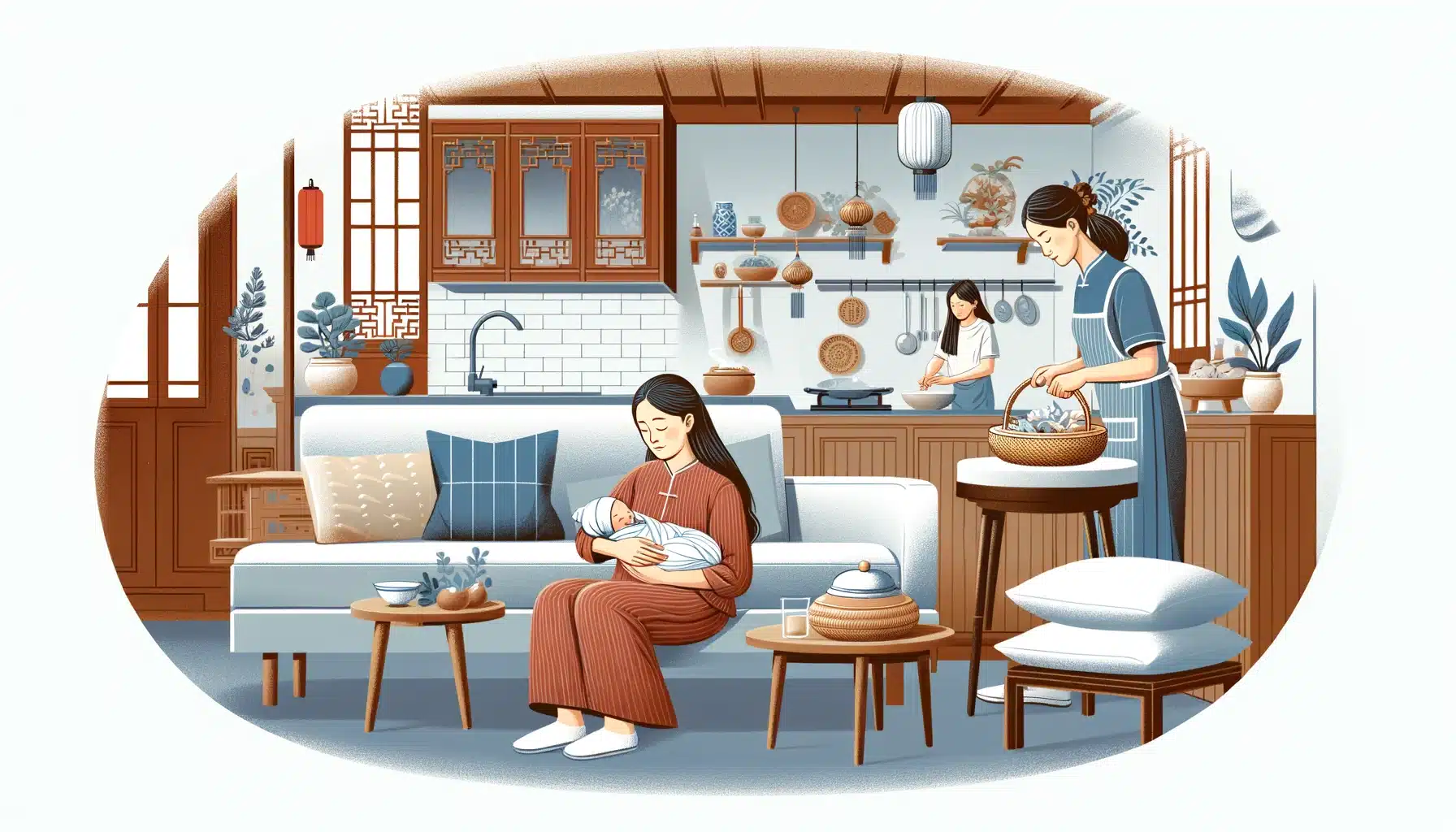
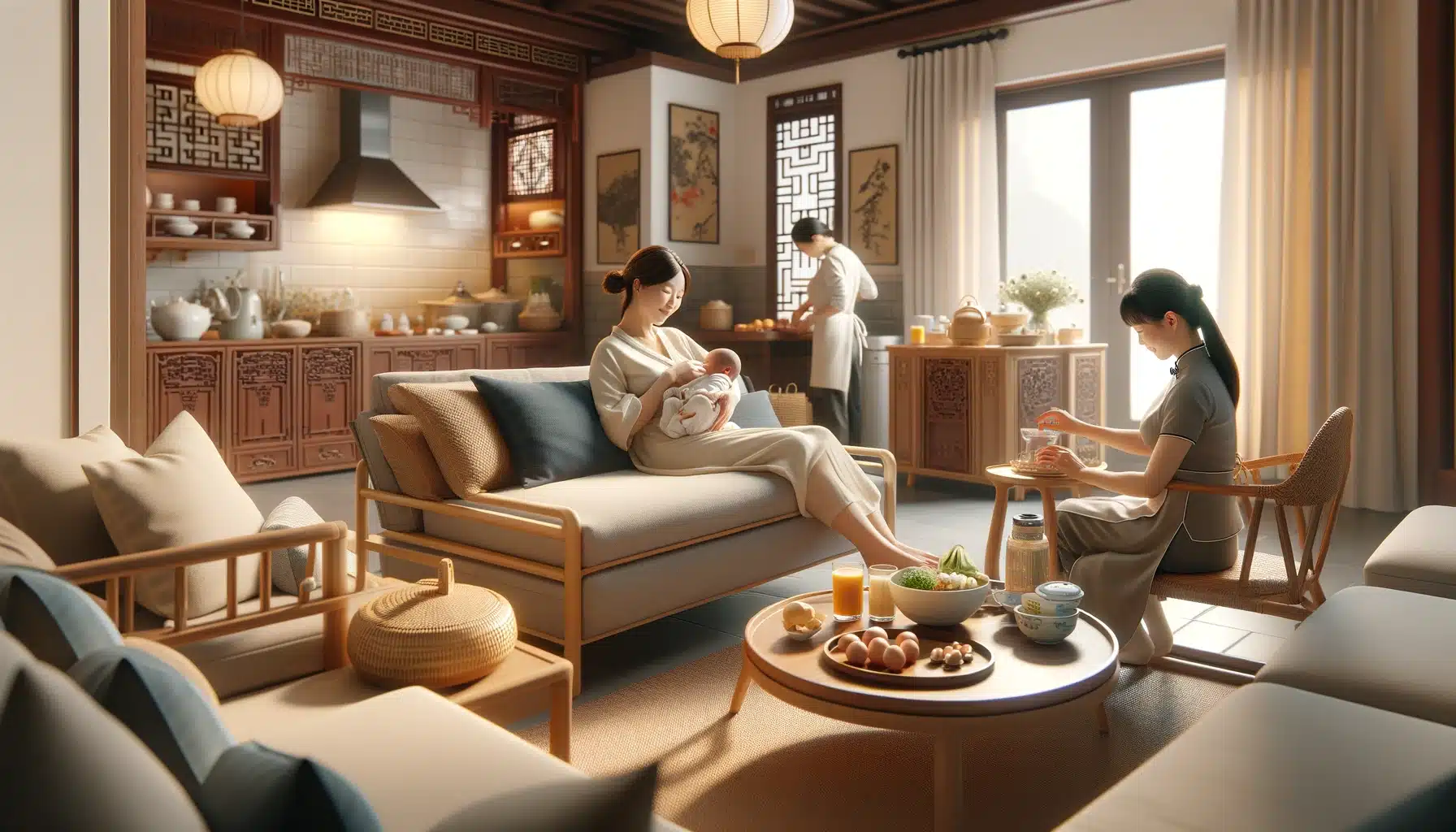
中国的产后传统–坐月子(zuò yuèzi)或 “坐月子“–是产后家庭遵守的有组织的恢复期。在大约 30 到 40 天的时间里,产妇在家休息,吃温热和营养丰富的食物,避免受寒,并接受专门的支持,这样她就可以完全专注于康复和与新生儿的亲子关系。这一传统在中国和更广泛的东亚文化中已有两千多年的历史,如今,世界各地许多具有不同文化背景的家庭都在完整或经过调整后遵循这一传统。
简要说明–您需要了解的内容
- 它是什么?一种拥有数百年历史的中国产后恢复传统,以产后 30-40 天内的休息、温补食物、保暖和悉心照料为中心。
- 它的来源源于传统中医关于恢复分娩过程中流失的气血的原理。拉丁美洲、南亚、东南亚和中东文化中也有类似的传统。
- 现代家庭如何实践:大多数家庭遵循核心原则–休息、营养、温暖–同时根据自己的舒适程度和医生的指导,在洗澡、饮食和活动方面调整更严格的规定。
- 谁在遵循?华裔家庭、混合文化家庭,以及越来越多的非华裔家庭,他们重视传统所提供的有组织的康复支持。
本页解释了这一传统的来源、它在实践中所涉及的内容、它是如何为现代家庭而演变的,以及为什么像左月子这样的产后恢复传统正在获得更广泛的认可–包括现在强调许多相同原则的西方医疗机构。

中国产后传统的由来
坐月子的历史可以追溯到两千多年前。最早的文字记载出现在汉代(公元前 206 年-公元前 220 年)的中国医学典籍中,其中将产后描述为身体极度虚弱的时期–在分娩过程中,产妇的身体失去了大量的气血,需要精心恢复。
传统中医为这一传统提供了框架。在中医看来,分娩会消耗母亲的阳气,使身体处于 “寒冷 “和虚弱的状态。坐月子的做法–温补食物、休息、避免受寒、接受专门护理–都是为了恢复平衡、重建体力,并预防因恢复不足而导致的长期健康问题。
这些原则并非中国某一地区所独有。不同省份和方言的 “左月子 “各有不同,饮食习俗和严格程度也略有不同。始终如一的是核心理念:产后第一个月是受保护的恢复期,母亲在此期间不应承担家务劳动、育儿决策或日常差事。
几个世纪以来,这一传统由母亲传给女儿,并在大家庭结构中得到加强,在大家庭结构中,祖母、姨妈和年长的亲戚提供亲力亲为的支持,使分娩成为可能。在现代家庭中,尤其是那些远离大家庭的家庭,通常会由一名产褥保姆(月嫂)来扮演这一角色。
传统的内容
中国的产后传统以四大支柱为中心:休息、温暖、滋养和支持。每一种具体做法都与其中的一个或多个原则相关联。
休息
产褥期的大部分时间,母亲都待在家里,最好是躺在床上或休息。体力活动仅限于轻微的运动。家务、跑腿和照顾年长孩子的工作由他人代劳。这样做的目的是让身体有不间断的时间从分娩中恢复过来。有关鼓励产妇做什么和避免做什么的详细信息,请参阅我们的中国产后分娩规则指南。
温暖
中医认为,寒气在产后更容易进入体内,并可能导致关节疼痛、疲劳或日后的消化问题。建议母亲穿上袜子,盖好腹部,避免通风,减少接触冷水和寒冷环境。许多家庭都会关闭窗户或限制使用空调,尤其是在头两周。
营养
饮食是该传统最独特的元素之一。膳食旨在恢复气血、促进乳汁分泌并从内部温暖身体。常见的禁闭食物包括麻油鸡、猪骨汤、鱼汤、姜汁菜肴、红枣茶和米酒浸泡食谱。传统上忌食生冷食物、生蔬菜和冰镇饮料。有关这一时期家庭饮食的全面信息,请参阅《中国产后饮食和坐月子食物》。
支持
传统认为母亲不会独自康复。历史上,这种支持来自大家庭。如今,许多家庭,尤其是那些附近没有亲戚的家庭,都会雇用一名住家月嫂(产褥期保姆),负责管理所有膳食、新生儿护理和隔夜喂养,这样产妇就可以完全专注于休息和亲子关系。保姆的职责完全是照顾新生儿和母亲的康复,她不照顾年长的孩子,有兄弟姐妹的家庭应另行安排照顾者。
世界各地的类似传统
中国的产后传统是最有条理的传统之一,但将产后几周视为受保护的恢复期的文化远不止中国。世界各地的许多传统中都有类似的做法。
拉丁美洲: La cuarentena(隔离期)是许多拉丁美洲国家产后 40 天的休息期。鼓励母亲待在家里,多吃有营养的食物,并接受家人的帮助–这些原则与《左传》中的 “月子 “非常相似。
南亚:在印度和巴基斯坦家庭中,jaapa(也叫chilla)包括 40 天的休息、母亲家人准备的特别饭菜、精油按摩和限制活动。在此期间,母亲通常会回到父母家中。
东南亚:马来西亚和印尼的家庭都会遵守pantang 节,其中包括饮食限制、草药浴、腹部捆绑,以及根据家庭传统长达 30 到 44 天的休息时间。
中东:许多阿拉伯家庭遵循产后 40 天的休息期,母亲由女性亲属照顾,吃恢复体力的食物,并限制探视和体育活动。
所有这些传统的共同点是认为产后需要专门的恢复时间、营养食品和持续的支持,这不仅是为了婴儿,也是为了母亲。

现代家庭为何仍遵循这一传统
中国的产后传统之所以经久不衰,不是因为家庭感到有义务,而是因为其核心原则行之有效。在产后第一个月接受有组织的休息、持续的营养补充和手把手支持的母亲们一致表示,当她们过渡到为人父母时,会感到更加坚强和自信。
现代医学越来越支持许多相同的原则。美国妇产科医师学会(ACOG)强调产后休息、营养和支持的重要性。2022 年发表在《营养素》上的一篇综述发现,产后期间摄入充足的蛋白质、铁和液体有助于身体恢复和泌乳,这些原则与传统的产褥期饮食密切相关。
对许多家庭来说,这一传统还提供了现代产后建议所缺乏的东西:清晰的日常结构。与 “能休息时就休息 “的模糊指示不同,产褥期给了第一个月一个可预测的节奏–准备饭菜、照顾婴儿、提供过夜支持,而母亲唯一的工作就是康复。在与我们合作过的数百个家庭中,母亲们最常说的一句话就是这种结构使她们的康复与众不同。
💡 What we hear from families
The families who are happiest with their confinement experience are the ones who focused on the principles — rest, nourishment, support — rather than trying to follow every traditional rule perfectly. Flexibility is not a compromise. It is how the tradition has always adapted across generations.
How the Tradition Has Evolved
Traditional zuo yue zi, practiced strictly, included rules that many modern families choose to adapt. In its strictest form, the mother would not shower or wash her hair for the full 30 to 40 days, would not leave the house, would avoid all cold foods and drinks, and would limit reading and screen time to rest her eyes.
Today, most families follow a modified version. Common adaptations include showering daily with warm water in a warm bathroom, washing hair once or twice a week with immediate blow-drying, incorporating some fresh fruits or preferred foods alongside traditional warming meals, taking short walks in mild weather after the first week or two, and allowing close family to visit briefly while keeping the first week or two quieter.
These adaptations reflect the same shift happening across many traditional practices: the underlying principles are preserved while the specific rules bend to fit modern life. A mother can maintain the warmth principle without avoiding bathing entirely. She can eat nourishing confinement meals while also having the occasional fruit she is craving. The tradition is a framework, not a rigid set of laws.
After a cesarean delivery, the tradition often extends and becomes more cautious. The surgical incision requires additional rest — most doctors advise against lifting anything heavier than the baby for at least six weeks. Many families who originally planned a 26-day booking extend to 40 days or longer after a C-section. For more on how long families typically observe confinement, see how long to book a confinement nanny.
The Role of a Confinement Nanny in the Tradition
Historically, the mother’s own mother or mother-in-law provided the hands-on support that made confinement possible — cooking meals, caring for the baby overnight, managing visitors, and keeping the household running. In modern families, especially those living far from extended relatives or in a different country, a professional confinement nanny (月嫂, yuè sǎo) fills this role.

A confinement nanny lives with the family full-time during the confinement period and handles all meals (typically three meals plus two to three soups or teas per day), newborn care around the clock including overnight feeds and diaper changes, breastfeeding support and positioning guidance, baby bathing and umbilical cord care, light household tasks related to the baby and mother, and practical recovery guidance based on experience with hundreds of families.
The nanny does not replace a doctor or medical provider. She does not diagnose conditions, prescribe treatments, or offer medical advice. But an experienced yue sao who has supported many postpartum recoveries will often recognize when something seems off and will encourage the mother or her partner to contact their healthcare provider promptly.
For many families, having a confinement nanny is what makes the tradition practical. Without nearby family, the alternative is the mother managing her own recovery, meals, and a newborn simultaneously — which is the opposite of what the tradition is designed to prevent. To learn more about hiring, costs, and what to expect, see our pages on how to hire a confinement nanny and confinement nanny costs.
Is This Tradition Only for Chinese Families?
No — and this is one of the most common questions we hear. The core principles of the Chinese postpartum tradition — rest, nourishing meals, warmth, and dedicated live-in support — benefit families of any cultural background.
We regularly work with mixed-culture families where one partner has Chinese heritage and the other does not. We also work with non-Chinese families who learned about confinement through friends, online research, or their own cultural traditions and want the structured recovery support a live-in nanny provides. The tradition translates well because the underlying needs — sleep, nutrition, help with the baby, and time to heal — are universal.
What varies is how strictly families follow the cultural practices. Some non-Chinese families adopt the full dietary tradition. Others focus primarily on the practical support — overnight newborn care, meal preparation, and breastfeeding help — without following TCM-specific guidelines around warmth or food temperature. Both approaches are completely normal, and a good confinement nanny adapts to whatever the family needs.
The World Health Organization (WHO) emphasizes that all new mothers benefit from adequate rest, nutrition, and emotional support in the postpartum period. The Chinese postpartum tradition simply provides a centuries-old framework for delivering exactly that.
Frequently Asked Questions
What does “sitting the month” mean?
“Sitting the month” is the literal English translation of 坐月子 (zuò yuè zi). It refers to the practice of the mother resting at home — largely in bed — for the first month after giving birth. The name reflects the central principle: the mother’s primary activity during this period is recovery, not housework or errands.
How long does the Chinese postpartum tradition last?
Most families observe 26 to 40 days. The traditional standard is one full lunar month (about 30 days), though many families extend to 40 days or longer — especially after a cesarean delivery or if the mother’s recovery is slower than expected. Some families observe up to 100 days. There is no single correct duration.
Is the postpartum tradition the same as the 5-5-5 rule?
Not exactly. The 5-5-5 rule covers the first 15 days after birth — five days in bed, five days on the bed, five days near the bed. The Chinese postpartum tradition is longer (30–40+ days) and includes specific dietary, warmth, and cultural practices beyond activity restrictions. The 5-5-5 rule can be thought of as the opening phase of a full confinement period.
Do I have to follow every traditional rule?
No — and most families do not. The tradition is a framework, not a rigid set of requirements. Most modern families follow the core principles (rest, warmth, nourishing meals, dedicated support) while adapting specific rules to their comfort level and their doctor’s guidance. An experienced confinement nanny can help you decide which practices matter most to your family.
What if my family has strong opinions about how strictly to follow the tradition?
This comes up frequently — especially when grandparents feel strongly about certain rules. The most effective approach is to discuss preferences before the baby arrives, ideally during the third trimester. A confinement nanny who has worked with many families can often bridge generational differences calmly and without conflict.
Ready to Plan Your Confinement?
If you are expecting and want the structured recovery support the Chinese postpartum tradition provides, we can help you find an experienced confinement nanny matched to your family’s preferences, dietary needs, and schedule. My Asian Nanny is a referral agency — we connect families with carefully vetted live-in caregivers across California and nationwide.