
出生後的 5-5-5 規則是什麼?產後恢復解釋
★ 自2011年起備受信賴
★ 背景調查與審核
🛡 60-90 Day Nanny Replacement Guarantee
📍 California & Nationwide Placements

Quick Answer
The 5-5-5 rule is a postpartum recovery framework: spend the first five days in bed, the next five days on the bed, and the following five days around the bed. It structures the critical first 15 days after birth around gradual rest — giving your body a clear recovery timeline instead of vague advice to “take it easy.” The rule aligns with the opening phase of traditional Chinese postpartum confinement (zuo yue zi), which extends structured rest to 30–40+ days.
Most new mothers hear some version of “rest when the baby rests” — and most find that advice nearly impossible to follow without concrete structure. The 5-5-5 rule fills that gap. By breaking the first 15 days into three distinct phases, it gives families a practical framework for how much rest is enough, when to start moving more, and what realistic recovery looks like in the earliest postpartum weeks.
The rule has gained significant attention in recent years, particularly among families exploring structured postpartum recovery beyond what Western medicine typically prescribes. It is not a medical protocol — no doctor will prescribe it on a discharge sheet. But it reflects what both traditional Chinese medicine and modern obstetric research agree on: the first two weeks after birth are the most critical recovery window, and mothers who rest more during this period recover faster, bond more effectively, and face fewer complications later.
The American College of Obstetricians and Gynecologists (ACOG) recommends limiting activity for at least six weeks after delivery. A 2023 systematic review in BMC Pregnancy and Childbirth found that structured postpartum rest — combined with adequate nutrition and social support — is one of the strongest predictors of positive maternal health outcomes.
5-5-5規則是什麼意思?
The rule is exactly what it sounds like — three phases of five days each, totaling 15 days of structured, graduated recovery. Each phase increases activity slightly while keeping rest as the central priority. The framework works because it replaces ambiguity with clarity: instead of asking “when can I do more?”, you know exactly where you are in the recovery timeline.
三個階段:15天的結構化休息
Phase 1
第1–5天:床上
The first five days are about as close to complete rest as practically possible. You stay in bed. You feed the baby. You sleep when the baby sleeps. Everything else — meals, diaper changes beyond your reach, laundry, visitors, household tasks — is handled by your support system.
This is the phase where your body begins the most intensive healing. Uterine contractions continue as the uterus returns to its pre-pregnancy size. Lochia (postpartum bleeding) is heaviest. If you had a vaginal tear or episiotomy, the tissue is at its most sensitive. If you had a C-section, the incision site needs protection from strain. The message of Phase 1 is unambiguous: do as little as possible.
For families with a confinement nanny, this phase runs smoothly — the nanny handles all overnight feeds, daytime baby care, and meal preparation. For families without dedicated help, the key is preparation: freezer meals, a fully stocked bedside station (water, snacks, phone charger, diapers, wipes), and clear agreements with your partner or family about who handles what.

Phase 2
第6至10天:床上
By day six, most mothers feel slightly more capable — not recovered, but less acutely exhausted. Phase 2 keeps you anchored to the bed but allows more movement within it. You sit up more. You might move to a comfortable chair nearby. Short trips to the bathroom feel less like expeditions. But you are not doing housework, cooking, or leaving the house.
This is often when breastfeeding begins to feel slightly less overwhelming (or slightly more frustrating, depending on how it is going). Milk supply is typically establishing during this window, and consistent feeding or pumping matters enormously. Having someone else manage the baby between feeds — handling diaper changes, soothing, and settling — allows the mother to focus on rest and milk production without the constant drain of being the sole caregiver.
Phase 3
第11至15天:床邊
Phase 3 is a gentle expansion. You move around the home — the couch, the kitchen table, a short walk down the hallway. You are not back to normal. You are gradually testing your body’s readiness for more activity, while continuing to prioritize rest between efforts.
Many mothers describe this phase as a turning point. Energy starts returning in small bursts. The fog of sleep deprivation lifts slightly (especially if someone else has been handling overnight feeds). You might feel like doing more — and that feeling is the biggest risk of Phase 3. The temptation to “catch up” on everything you have not been doing for two weeks is strong. Resist it. The recovery is still underway. Overdoing it now can set you back physically and emotionally.

Want Support Through the First 15 Days — and Beyond?
A confinement nanny handles overnight care, meals, and newborn management so you can actually follow the 5-5-5 rule. Tell us your due date to get matched.
60-90 day replacement guarantee · Quick & easy to get started · California & nationwide
為什麼5-5-5規則有效?

The rule works because it transforms abstract recovery advice into a tangible daily framework. Instead of wondering “am I resting enough?” or “is it too soon to do laundry?”, you have clear guardrails for each phase. That structure reduces decision fatigue — which matters enormously when you are sleep-deprived, hormonally shifting, and adjusting to a completely new daily reality.
There is also a physiological basis. The first two weeks after birth are when the uterus undergoes the most rapid involution (returning to pre-pregnancy size), when perineal or cesarean wounds are most vulnerable, and when the risk of postpartum hemorrhage is highest. Limiting activity during this window is not optional wellness advice — it is alignment with what your body actually needs to heal safely.
The World Health Organization (WHO) identifies adequate rest and social support as two of the most protective factors against postpartum mood disorders. The 5-5-5 rule, when supported by a partner, family member, or professional caregiver, delivers both.
5-5-5規則如何與產後禁閉相關

The 5-5-5 rule is not a Chinese tradition by name, but it maps closely to the opening phase of Chinese postpartum confinement (zuo yue zi). Traditional confinement lasts 30 to 40 days and includes everything the 5-5-5 rule covers — structured rest, limited activity, dedicated support — plus specific dietary practices, warmth protocols, and cultural customs that extend well beyond the first 15 days.
Families who follow the 5-5-5 rule and find it valuable often ask: “what comes next?” The answer, in the confinement tradition, is continued structured recovery. The warming meals continue. The overnight newborn support continues. The rest prioritization continues — just with gradually increasing flexibility. For families interested in extending the structure beyond day 15, our postpartum confinement rules guide covers the full 40-day framework.
常見挑戰與適應方法
The 5-5-5 rule assumes a level of support that not every family has. Single parents, families without nearby relatives, and parents returning to work early face real constraints. Here is how to adapt the framework to different situations:
- No family support nearby. Focus on the first five days as the non-negotiable minimum. Prep freezer meals, set up a bedside station, and simplify everything. If budget allows, even three to five days of professional postpartum help during Phase 1 can be transformative.
- Older children at home. Arrange separate childcare for older kids during at least the first week. A confinement nanny focuses exclusively on the newborn and the mother — she does not care for older children — so additional help is essential.
- C-section recovery. Extend the framework. After a cesarean, doctors typically recommend six to eight weeks of limited activity. Some families extend the 5-5-5 structure to 7-7-7 or even 10-10-10 to align with their surgical recovery timeline.
- Returning to work before day 15. Many mothers cannot take 15 full days off. Even partial adherence helps — if you can follow Phase 1 strictly and then modify Phases 2 and 3 around work demands, the benefits of that initial rest period still compound.
家庭在前15天最感到驚訝的事
From Our Placement Experience
After placing over 1,000 families with confinement nannies, three things surprise first-time parents most about the early postpartum period:
Sleep deprivation is worse than expected. Even families who “prepared” for it are shocked by how 90-minute sleep fragments affect cognition, mood, and physical healing. Having someone handle overnight feeds — whether a partner, family member, or nanny — is the single highest-impact intervention in the first 15 days.
Recovery takes longer than social media suggests. The culture of “bouncing back” creates unrealistic expectations. Day 5 is still deep recovery. Day 15 is still early recovery. Accepting this timeline — rather than fighting it — is what the 5-5-5 rule is designed to help with.
The meals matter. Families who dismissed the importance of postpartum nutrition quickly discover that eating well is one of the few things that makes the exhaustion manageable. Having three fresh meals and multiple soups prepared daily by a confinement nanny removes a burden that many families did not realize they were carrying.
5-5-5規則與完全限制:兩者如何比較?
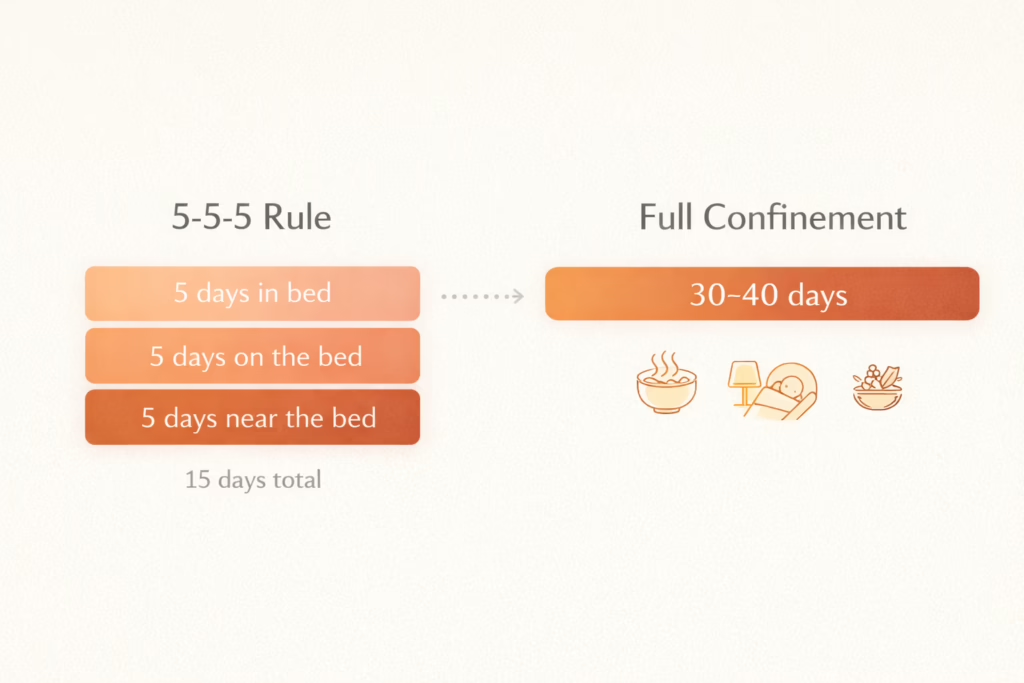
| Feature | 5-5-5規則 | Full Chinese Confinement |
|---|---|---|
| Duration | 15天 | 30–40+ days |
| Structure | Activity-based phases | Activity + diet + warmth + cultural practices |
| Dietary guidelines | General “eat well” advice | Specific warming meals, ingredient protocols, weekly progressions |
| Dedicated caregiver | Recommended but not required | Central to the practice (confinement nanny or family elder) |
| Cultural framework | Secular / universal | Rooted in TCM and Chinese cultural tradition |
| Overnight newborn care | Depends on available support | Full coverage when a confinement nanny is present |
Many families start with the 5-5-5 rule and, after experiencing its benefits, decide to explore the full confinement model. The transition is natural — the 5-5-5 rule is essentially Phase 1 of confinement. For families interested in extending structured support with Chinese postpartum meals and confinement foods, the dietary element adds a dimension that the 5-5-5 rule alone does not include.
產假保母如何支持5-5-5規則

Following the 5-5-5 rule is dramatically easier when a confinement nanny is present. She handles the three things that most directly compete with the mother’s rest: overnight newborn care, daily meal preparation, and baby-related household tasks. Without her, the mother must choose between resting and getting things done. With her, there is no choice to make — the nanny handles everything so the mother can actually follow the recovery framework.
Families interested in hiring a confinement nanny can start the process through our hiring guide. For pricing, visit confinement nanny costs.
5-5-5 規則適合每個家庭嗎?
The 5-5-5 rule is a guideline, not a prescription. It works best for families who value structured recovery and have — or can arrange — adequate support during the first two weeks. Families with no help, solo parents, or mothers who must return to work immediately may not be able to follow it strictly, and that is fine. Even partial adherence — focusing on Phase 1 as the minimum — provides meaningful recovery benefits.
The rule is also adaptable to different delivery types. After a vaginal delivery without complications, 15 days of graduated rest is typically sufficient for the initial recovery phase. After a C-section, extending the timeline (7-7-7 or longer) aligns better with surgical recovery needs. After multiples, even more rest is warranted. The principle scales — the framework stays the same, but the duration adjusts.
Ready to Plan Your Postpartum Recovery?
Over 1,000 families have trusted My Asian Nanny with their postpartum recovery. Tell us about your family and due date — we will match you with experienced, vetted confinement nannies.
Trusted since 2011 · Background-checked & vetted · 60-90 day replacement guarantee
常見問題
什麼是產後的5-5-5法則?
5-5-5 規則是產後恢復指引:臥床五天,臥床五天,五天臥床。它安排出生後的前15天,讓母親能在身體上恢復並調整情緒,然後才能恢復正常活動。
5-5-5規則是中國禁閉的一部分嗎?
The 5-5-5 rule covers the first 15 days — roughly the opening phase of a traditional Chinese confinement period, which typically lasts 30 to 40+ days. Families who observe full confinement continue structured rest, confinement meals, and dedicated caregiver support beyond day 15.
所有媽媽都必須遵守5-5-5規則嗎?
不——5-5-5規則只是指引,不是醫療要求。每一次生產和每次康復都不同。有些母親嚴格遵守;其他人則根據自身情況調整。前兩週多休息一段時間,對恢復有幫助。
剖腹產的母親可以遵守5-5-5規則嗎?
Yes — and they may need even more rest than the rule prescribes. After a cesarean delivery, doctors typically recommend limiting activity for six to eight weeks. Some families extend the framework to 21 or 30 days after a surgical birth.
What if I don’t have anyone to help me?
Focus on the first five days as the minimum — prep freezer meals, set up a bedside station, and simplify everything. If budget allows, even a few days of postpartum help (a postpartum doula or confinement nanny) during the hardest phase can make a meaningful difference.
15天結束後會發生什麼?
Recovery does not end at day 15. Most healthcare providers consider the initial postpartum recovery period to be six weeks, with full recovery taking up to 12 weeks or longer. The 5-5-5 rule structures the most critical opening phase — but continued rest, good nutrition, and support remain important. See our confinement rules guide for the full 40-day framework.
Your Recovery Starts with the Right Support
Share your due date, location, and preferences. We match you with experienced, background-checked confinement nannies who fit your family’s needs.
1,000+ families placed · 60-90 day replacement guarantee · California & nationwide
What Families Are Saying
Real reviews from Google and Yelp — trusted by 1,000+ families since 2011