
Postpartum Nanny: What She Does, What It Costs and How to Hire One
A postpartum nanny is a newborn-care specialist who lives in your home for the first weeks after the birth. She takes the night feeds, the diapers and the bathing, and she protects the mother’s rest while her body recovers. My Asian Nanny has placed postpartum and confinement nannies with more than 1,000 families since 2011. This guide covers what the role includes, what it costs in 2026 and how a placement works.
★ Trusted since 2011
★ Background Checked & Vetted
🛡 60-90 Day Replacement Guarantee
📍 California & Nationwide

Postpartum Nanny: Key Facts
- Live-in care: she stays in your home, usually for 26 to 40 days after the birth.
- $290–$330+ a day for baby care only; $390–$430+ a day when she also cooks for the mother.
- Book 3–6 months before your due date.
- Every nanny completes a Tdap vaccination, a current-season flu shot and a recent TB screening before placement.
- Our referral fee is 10% of the total booking, with an $850 minimum.
What a Postpartum Nanny Does
A postpartum nanny covers the newborn around the clock and takes the practical load off the mother, so both parents can sleep and the mother can recover. The work falls into five areas:
| Area | What she does |
|---|---|
| Newborn care | Feeding by breast, bottle or both; diaper changes; bathing; umbilical cord care; swaddling and safe-sleep positioning |
| Nights | Overnight feeds and settling, so the parents sleep in longer stretches instead of waking every two hours |
| Mother’s recovery | Brings the baby to breastfeed, helps with pumping and bottles, and keeps the mother resting, fed and hydrated |
| Meals | Cooks for the mother when meals are booked; many of our nannies prepare confinement meals |
| Light household | Baby laundry, bottle washing and keeping the nursery and kitchen she uses tidy |
A postpartum nanny is not a nurse and not a housekeeper. She does not give medical care, and she is not hired to look after older children or to deep-clean the house. Medical questions go to your pediatrician or OB. Once the newborn weeks end, most families move to a regular nanny for everyday childcare.
A Typical Day and Night
| Time | What the nanny handles |
|---|---|
| Morning | Takes the baby after the last night feed, bathes and changes, and brings the baby to feed while the mother eats breakfast |
| Daytime | Feeds and settles the baby between naps, washes bottles and baby laundry, and cooks the mother’s meals if meals are booked |
| Evening | Gets the night ready: clean bottles, a stocked changing area and a feeding plan agreed with the parents |
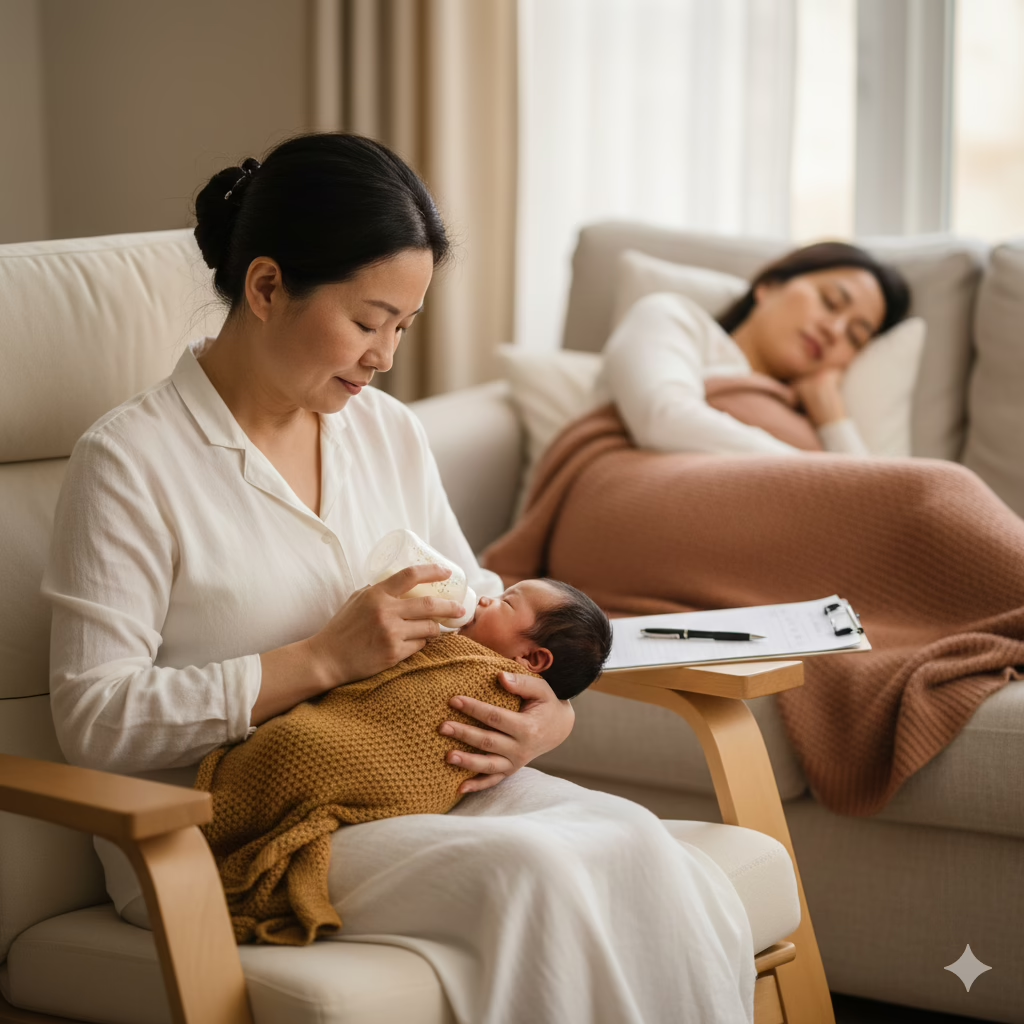
| Night | Handles overnight feeds and settling, bringing the baby to the mother to breastfeed or bottle-feeding so the parents can sleep |
She rests during the day, usually while the baby naps. Our sample postpartum nanny schedules show how live-in and night-focused days are set up.
Why the First Six Weeks Matter
The newborn weeks and the mother’s recovery happen at the same time. Most newborns feed 8 to 12 times in 24 hours, and the first six weeks after birth are when the body does most of its healing. A postpartum nanny means the person recovering is not also the person getting up for every feed.
Postpartum Nanny Options: Live-In, Confinement (Yue Sao) and Night Care
My Asian Nanny places four kinds of postpartum help. They differ in hours, where we can place them and what they cost:
| Option | Hours | Where we place | Typical rate | Best for |
|---|---|---|---|---|
| Live-in postpartum nanny | Lives in; covers day and night | Nationwide | $290–$330+ a day, or $390–$430+ with meals | Families who want one trusted person handling the newborn around the clock |
| Chinese confinement nanny (yue sao) | Lives in; newborn care plus confinement meals | Nationwide | $290–$430+ a day, depending on meals | Families following zuo yue zi, the traditional month of rest after birth |
| Night postpartum nanny | Overnight shifts of 8 to 12 hours; goes home in the morning | Nationwide; full-time positions only outside California | $299–$526 a night | Parents with daytime help who mainly need sleep |
| Night nurse | Overnight, paid by the hour; live-out | California only | $37–$65 an hour | California families who want flexible overnight cover |
Choosing is mostly about nights and meals. If you have daytime help and mainly need sleep, a night postpartum nanny is usually enough. If you want one person covering day and night, choose a live-in postpartum nanny. If you want warming confinement meals and the zuo yue zi routine, choose a confinement nanny. In California, a night nurse booked by the hour is the most flexible choice for occasional nights.
Postpartum Nanny, Confinement Nanny and Yue Sao
A confinement nanny, called yue sao (月嫂) in Chinese, is a postpartum nanny trained in zuo yue zi (坐月子): rest, warmth and warming recovery meals through the first month. Every confinement nanny is a postpartum nanny, but not every postpartum nanny cooks confinement food. Families who want that tradition can read the full guide to the Chinese confinement nanny.
Postpartum Nanny vs Doula, Night Nurse and Regular Nanny
Families often weigh a postpartum nanny against three or four other roles. The main difference is hands-on hours: a postpartum nanny does the newborn care herself, day and night, while the others visit for a few hours, cover nights only, or start later.
| Role | Main focus | Typical hours | Medical care? |
|---|---|---|---|
| Postpartum nanny | Newborn care and the mother’s recovery | Live-in, day and night | No |
| Postpartum doula | Emotional support, education and light help | Daytime visits of a few hours | No |
| Night nanny or night nurse | Overnight newborn care | One overnight shift at a time | No; in this role a night nurse is usually not a licensed nurse |
| Postpartum nurse (RN) | Clinical checks for mother or baby | Short visits | Yes |
| Regular nanny | Childcare for an older baby or toddler | Daytime, long term | No |
Our side-by-side guides go further: postpartum nanny vs doula, postpartum nanny vs night nurse, postpartum nanny vs baby nurse and postpartum nanny vs a regular nanny.
Some families combine roles. A common pattern is a live-in postpartum nanny for the first month, followed by a regular nanny once the newborn weeks are over.
When Another Role Is the Better Fit
A postpartum nanny is the wrong hire if what you mainly want is a few hours a week of emotional support and breastfeeding education, which is a postpartum doula’s work, or if you or the baby need clinical care, which calls for a nurse or your doctor. If your baby is already several months old, you need a regular nanny rather than newborn care.
How Much a Postpartum Nanny Costs
A live-in postpartum nanny costs $290–$330+ a day for baby care only, and $390–$430+ a day when she also cooks for the mother. These ranges apply in every region as a rule of thumb; our postpartum care cost calculator gives a closer estimate for your region and the language you need.
| Care | Rate | 30-day example |
|---|---|---|
| Live-in, baby care only | $290–$330+ a day | $8,700–$9,900+ |
| Live-in, baby care plus meals for the mother | $390–$430+ a day | $11,700–$12,900+ |
| Night postpartum nanny | $299–$526 a night | Depends on nights per week |
| Night nurse (California only) | $37–$65 an hour | Depends on hours booked |
The daily rate is paid to the nanny. My Asian Nanny’s referral fee is separate: 10% of the total booking, with an $850 minimum. For an out-of-state placement, your family also covers her travel to and from your home, and the travel day is paid as a working day. Totals for 45, 60 and 90 days are in our postpartum nanny costs guide.
What the Daily Rate Covers
The daily rate covers the nanny’s round-the-clock newborn care and, at the higher rate, her cooking for the mother. It does not cover her travel for an out-of-state placement, our referral fee or baby supplies. Because she lives in, your family also provides a private room and her meals. Postpartum care is quoted per day, not per hour.
Not Sure Which Type of Postpartum Support You Need?
We’ll match you with the right caregiver based on your recovery needs, family situation, and timeline. Our placement team has 1,000+ successful placements—we know what works.
60-90 day replacement guarantee · Quick & easy to get started · Families nationwide
How to Hire a Postpartum Nanny Through My Asian Nanny
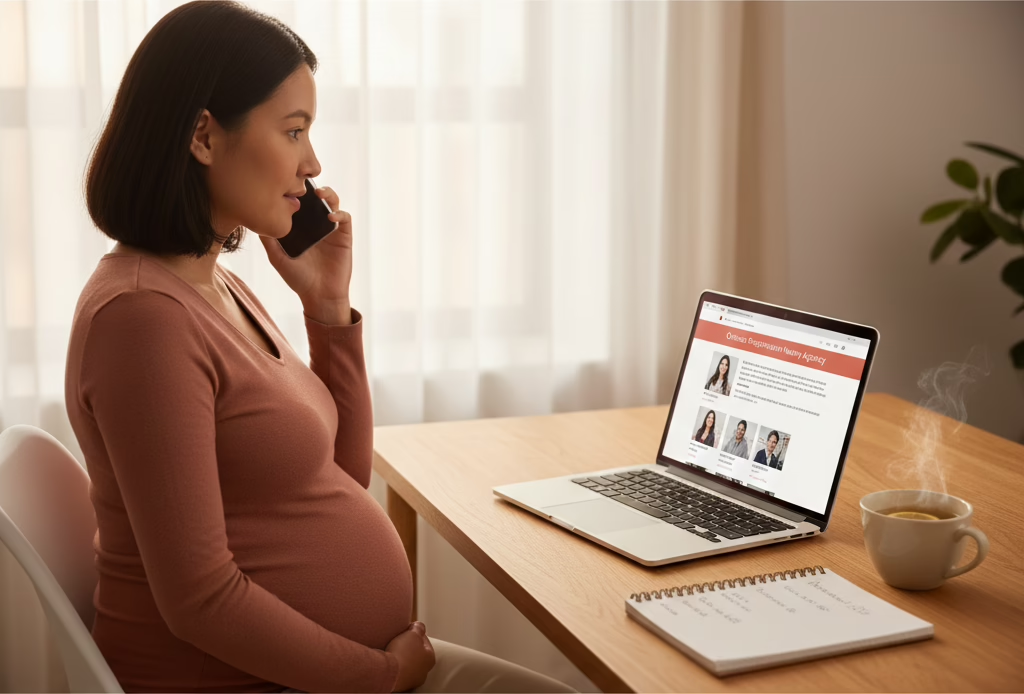
Most families go from intake form to a nanny’s first day in two to four weeks. The best time to start is months earlier, though, because experienced postpartum nannies book up well ahead of due dates.
When to Start Looking
| Before your due date | What to do |
|---|---|
| 3–6 months | Decide what care you need and submit your intake form. This is the window with the widest choice of candidates. |
| 2–3 months | Interview candidates and confirm your start date. |
| 1–2 months | Check that her pre-placement health screening is done and, for an out-of-state nanny, that her travel is booked. Set up the nursery and her room. |
| Under a month | Last-minute bookings work when a nanny is available, with fewer candidates to choose from. |
What We Screen For
| Check | What it covers |
|---|---|
| Background | Criminal background check, identity and work authorization |
| Experience | At least two years of newborn care, with infant CPR and first aid |
| References | Verified work history and references from past families |
| Health | A Tdap (whooping cough) vaccination, a current-season flu shot and a recent TB screening before placement |
| Fit | Languages, cooking, feeding approach and household routines matched to your family |
The Six Steps From Intake Form to Day One
Every placement follows the same six steps. See our placement process for more detail, or the confinement nanny hiring guide if you want a traditional yue sao.
1
Submit your intake form
Tell us your due date, city and household, the care you want (live-in or nights, baby care only or meals too) and the languages you need.
2
We shortlist candidates
We screen for experience, references and health requirements, then send a short list of two to four vetted candidates who fit your dates.
3
You interview
Phone or video interviews. Ask about newborn experience, feeding, nights and how she would handle an emergency.
4
Confirm the details
Choose your nanny and confirm the start date, daily rate, meals and her room.
5
Meet before the birth
An optional video or in-person meeting to go over the nursery, your feeding plan and emergency contacts.
6
Care begins
She starts on the agreed date. We stay your point of contact for schedule changes and, if she is not the right fit, a replacement for the full length of your booking.
Questions to Ask Each Candidate
- How many families have you worked with as a postpartum nanny, and for how long each time?
- How do you handle night feeds when the mother is breastfeeding?
- Have you cared for twins or a baby born early?
- What do you cook for a mother in the weeks after birth?
- What would you do if the baby had a fever at 2 a.m.?
- Are you available for the full length of our booking?
Where We Place Postpartum Nannies
We place live-in postpartum nannies with families in California and nationwide. Outside California every postpartum placement is live-in, with one exception: night postpartum nannies, who work overnight shifts in full-time positions. Night nurses are placed in California only.
Many of the nannies we place are based in California and travel to families in other states, with the family covering travel. For local hospitals, grocers and details for your city, start with postpartum nanny near me or see all our service areas.
Postpartum Nanny FAQ
How long do families keep a postpartum nanny?
Most families book 26 to 40 days, which covers the traditional confinement month and the first weeks at home. Some keep their nanny for 60 or 90 days, for example with twins or a slower recovery. You can usually extend a booking if the nanny’s schedule allows.
Does a postpartum nanny have to live in?
For day-and-night care, yes: every postpartum nanny we place lives in. If you only need nights, a night postpartum nanny works overnight shifts and goes home in the morning; outside California these are full-time positions. In California you can also book a night nurse by the hour.
How far ahead should I book a postpartum nanny?
Start 3–6 months before your due date. Experienced nannies book up early, and the extra time lets you interview more than one candidate. Later bookings are possible when a nanny is available, with fewer candidates to choose from.
Is a postpartum nanny covered by insurance?
Usually not. Health insurance pays for medical care, and a postpartum nanny is non-medical help. Some families ask their employer’s benefits team whether a dependent-care FSA applies to in-home care. For budgeting, see our postpartum nanny costs guide.
What if the nanny is not the right fit?
Tell us early. Small things, like meal style or how nights are split, can often be fixed with a conversation. If it is a real mismatch, we replace a postpartum nanny for the full length of your booking at no additional cost.
Which recovery warning signs should I watch for?
Your OB gives you postpartum guidelines at discharge. Call your provider for a fever above 100.4°F, bleeding that soaks more than one pad an hour, foul-smelling discharge, severe pain, chest pain, a severe headache or vision changes. A postpartum nanny watches for these and tells you straight away. For intrusive thoughts, hopelessness or panic, contact your provider or call the National Maternal Mental Health Hotline at 1-833-852-6262. Read more on ACOG’s postpartum depression resource or NIMH perinatal depression information.
Find the Right Postpartum Support for Your Family
Whether you are searching for a postpartum nanny near me, a live-in confinement nanny or overnight help, tell us your due date and city and we will match you with vetted candidates. More than 1,000 families have trusted us for placements across California and nationwide.
60-90 day replacement guarantee · Quick & easy to get started · Families nationwide
What Families Are Saying
Real reviews from Google and Yelp — trusted by 1,000+ families since 2011