
Bilingual Tutors: Private Language and Academic Support for Children
Vetted bilingual tutors for Mandarin, Cantonese, and English instruction. Private lessons, homework support, and conversational immersion tailored to your child. In-person tutoring for California families since 2011.
Background-Checked & Vetted
1,000+ Families Served
Since 2011
Replacement Guarantee
What Does a Bilingual Tutor Do?
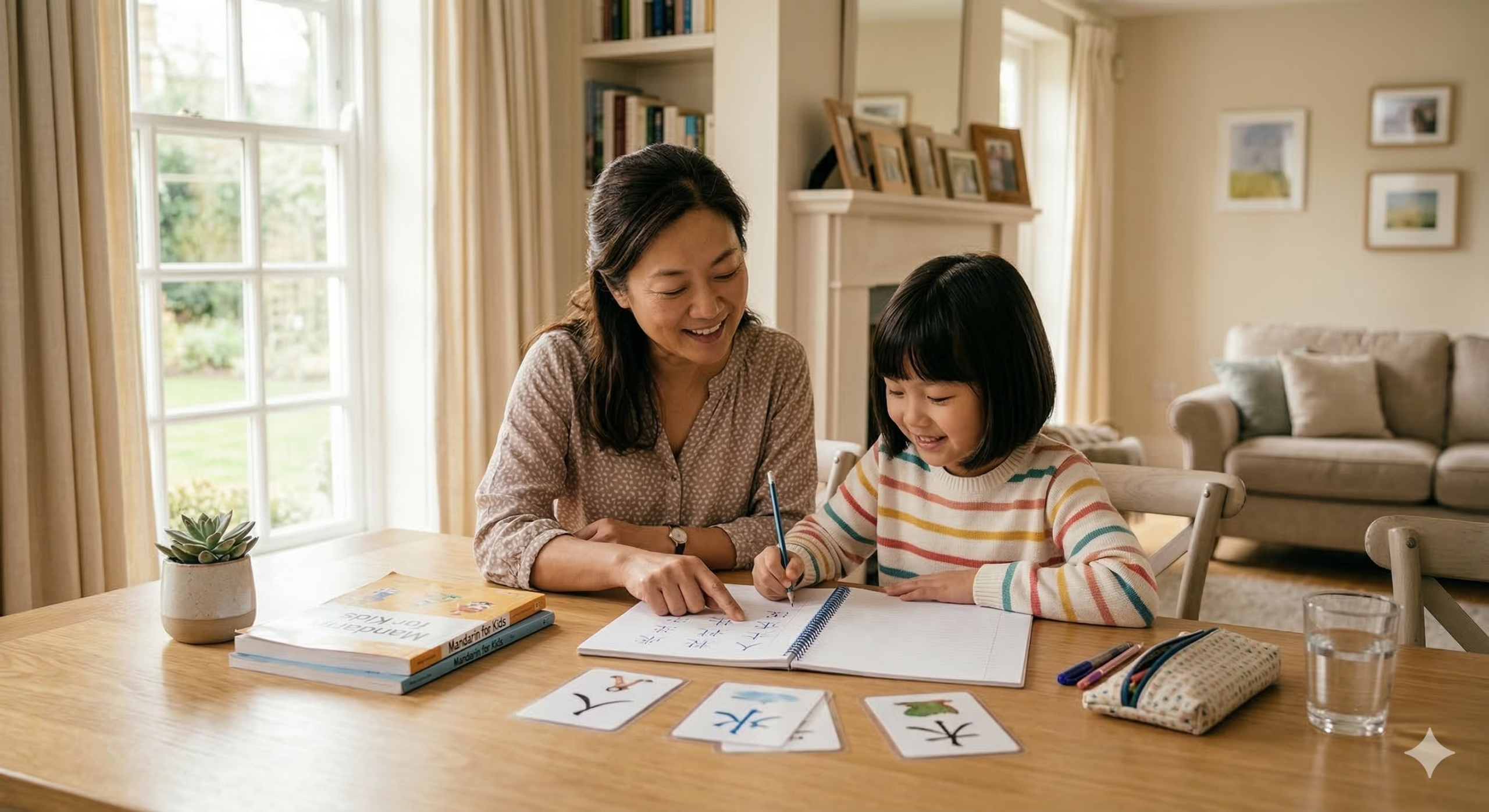
A bilingual tutor works one-on-one with your child to develop fluency in a second language, reinforce academic skills, or both. This is not classroom instruction adapted to a smaller group. It is a private, customized learning relationship designed around your child’s specific level, pace, and goals. Some families hire a tutor to build Mandarin reading and writing from scratch. Others need support maintaining conversational Cantonese in a household where English has become the dominant language. Still others want a tutor who can help a child keep up with a dual-language school curriculum or prepare for language proficiency assessments. My Asian Nanny is a curated referral agency that matches families with vetted bilingual tutors across the United States — placing educators who understand how to teach language effectively to children of different ages and learning styles.
Why Families Hire Bilingual Tutors
The most common reason is straightforward: a child is losing — or never developed — the ability to communicate in their family’s heritage language. Grandparents speak Mandarin or Cantonese. The child responds in English. Conversations become one-directional. Over time, the connection narrows. A bilingual tutor can reverse that trajectory by building conversational fluency in structured, consistent sessions that a busy household cannot always provide on its own.
For other families, the motivation is academic. Research consistently shows that children who develop proficiency in a second language perform better across subjects — not just in language arts but in mathematics, problem solving, and reading comprehension. Parents who understand the cognitive benefits of early language acquisition are looking for a qualified tutor who can deliver those benefits through structured, engaging instruction.
Some families are preparing their child for a specific academic path — entry into a bilingual school program, a Mandarin immersion track, or a Chinese language proficiency exam. In those cases, the tutor serves as a targeted academic coach who knows the material, understands the assessment standards, and can pace the instruction to hit a deadline.
And for families who have recently relocated — whether internationally or between regions — a bilingual tutor helps smooth the transition. A child adjusting to English-language schooling benefits from targeted support. A child who has left a Mandarin-speaking environment benefits from structured sessions that keep the language active.
The through-line across all of these scenarios: language skills erode without consistent practice, and a qualified tutor provides the structure, frequency, and expertise to keep them developing.
For daily immersion beyond tutoring hours, a live-in Chinese nanny keeps Mandarin or Cantonese in the home all day — many families combine both.
Benefits of Bilingual Learning for Children
The research on early bilingual education is deep and consistent. Children who develop proficiency in two languages show measurable advantages that extend well beyond the languages themselves.
Cognitive development. Bilingual children develop stronger executive function — the mental processes that govern attention, working memory, and task switching. Studies from the National Institutes of Health and peer-reviewed journals in developmental psychology consistently show that managing two language systems strengthens the brain’s capacity for focus, problem solving, and cognitive flexibility.
Academic performance. Bilingual students tend to outperform monolingual peers on standardized tests in reading and math. The discipline required to process, store, and retrieve information in two languages translates into stronger academic habits across all subjects.
Cultural connection. For families with roots in Chinese-speaking communities, language is the primary vehicle for cultural transmission. Proverbs, family stories, humor, and shared history live inside the language. When a child loses fluency, the cultural connection dims. A tutor who teaches the language in cultural context keeps that connection alive.
Communication with family. In multigenerational households, language gaps create real barriers. A child who cannot speak Cantonese with a grandmother who cannot speak English loses access to that relationship. Tutoring closes the gap — not theoretically, but practically, in the conversations that happen at dinner, during holidays, and in daily life.
Long-term advantage. Mandarin is the most widely spoken language in the world. Fluency in Mandarin or Cantonese — particularly combined with native English — is an asset in higher education admissions, career opportunities, and global mobility. The earlier a child starts, the deeper and more natural the fluency becomes.
Languages We Tutor
Our tutors specialize in three languages. Each comes with different teaching approaches, learning materials, and family goals.
Mandarin Chinese
Mandarin is the most commonly requested language in our tutoring placements. Families typically want their children to develop literacy — the ability to read and write Chinese characters — alongside conversational fluency. Our Mandarin tutors work with children at every level: from preschoolers hearing their first tones to high schoolers preparing for AP Chinese or HSK proficiency exams. Sessions cover pinyin pronunciation, character recognition and writing, reading comprehension, and structured conversation practice. For heritage speakers who understand spoken Mandarin but cannot read or write, the tutor focuses on closing that specific gap.
Cantonese
Cantonese tutoring is most often driven by family language preservation. Many Cantonese-speaking families find that their children default to English outside the home, and conversational fluency fades. Our Cantonese tutors emphasize spoken language skills — tonal accuracy, vocabulary building, conversational practice, and listening comprehension. For families where grandparents or extended relatives speak only Cantonese, the tutor works to rebuild the child’s ability to participate in those conversations naturally and confidently.
English Language Support
For children in bilingual households where English is the second language, our tutors provide targeted English instruction. This includes reading comprehension, writing skills, vocabulary development, grammar support, and academic English for school assignments. The approach is not a generic ESL program — it is one-on-one instruction calibrated to the child’s grade level, school curriculum, and specific areas of difficulty. For families who have recently arrived in the United States or transitioned from a Chinese-language education system, this support helps the child keep pace academically while building English confidence.
Find a Tutor for Your Child
Tell us about your child’s learning goals and we will match you with a vetted bilingual tutor.
Background-checked tutors · Replacement guarantee · In-person tutoring in California
How Tutoring Sessions Work
1
Consultation
Share your goals — what language your child needs to learn or improve, their current level, the schedule that works for your family, and any specific academic requirements. Do they need to prepare for an exam? Communicate with relatives? Keep up with a dual-language curriculum? This conversation shapes the match.
2
Matching
We review our roster of vetted tutors and select candidates whose teaching experience, language fluency, and approach to working with children align with your family’s needs. Every candidate has been through our screening process — including background checks, reference verification, and an assessment of their teaching ability.
3
Trial Session
Your child meets the tutor for an initial working lesson. You observe how the tutor engages your child, adapts to their learning style, and structures the material. After the session, you decide whether to proceed.
4
Ongoing Sessions
Once you confirm the match, sessions continue on your agreed schedule — weekly, twice weekly, or on a custom cadence. The tutor tracks your child’s progress, adjusts the curriculum as needed, and communicates with you regularly about milestones and areas for continued focus.
Learn more about us and visit our FAQ page for additional details on how the process works from first call to placement day.
When Families Should Hire a Tutor
There is no single right age or moment to start. But there are windows and situations where a tutor makes the most difference.
Ages 3 to 6: The language acquisition window. Young children absorb language with remarkable speed and natural pronunciation accuracy. A tutor who introduces Mandarin or Cantonese during this window can establish a foundation that becomes progressively harder to build later. Sessions at this age are play-based — songs, stories, games, and conversational interaction rather than formal instruction.
Ages 7 to 12: Building literacy and structure. School-age children are ready for character recognition, reading, and structured writing practice. This is also the age where heritage language erosion accelerates as English-dominant schooling takes over. A tutor at this stage preserves and extends what was started at home.
Ages 13 and up: Academic and exam preparation. Teenagers working toward AP Chinese, HSK certification, or bilingual school requirements benefit from a tutor who understands the assessment standards and can pace instruction accordingly. At this stage, the work is more academic and goal-oriented.
Transitional moments. Families relocating internationally, children switching between school systems, or households adjusting to a new language balance at home — these inflection points are when a tutor provides the most immediate value.
The consistent theme: earlier is better, but it is never too late. A qualified tutor meets your child where they are and builds from there.
Private Tutoring vs. Group Classes
Both have a place. But they serve different needs.
A group language class — whether at a weekend school, cultural center, or online platform — follows a fixed curriculum at a fixed pace. Your child progresses with the class regardless of whether they have mastered the material or need more time. The instructor divides attention across multiple students. The schedule is set by the program, not by your family.
A private tutor adapts to your child. The curriculum starts where your child is, not where a class syllabus dictates. Lessons move faster through material your child has mastered and slow down where they struggle. The tutor adjusts teaching methods in real time based on how your child responds. Sessions happen in your home on your schedule.
Group Class: Fixed curriculum, fixed pace, shared attention, program-set schedule.
Private Tutor: Customized curriculum, adaptive pace, one-on-one attention, family-set schedule.
For children who are ahead of or behind a typical class level, private tutoring is significantly more effective per hour of instruction. For families with irregular schedules or specific academic deadlines, the flexibility is essential. Group classes work well for social motivation and peer interaction — but they rarely replace the depth and efficiency of one-on-one instruction.
Why Families Trust My Asian Nanny
Hiring a tutor for your child requires a different kind of trust than hiring for household support. You are placing an adult in a teaching relationship with your child — often in your home, often unsupervised after the first few sessions. The vetting has to reflect that.
Our screening process evaluates more than background and references. For tutoring placements, we assess teaching experience, language fluency in the specific dialect your family needs, the ability to engage children of different ages, and the patience required to work with young learners who may be reluctant or frustrated. Not every strong speaker is a strong teacher. We screen for both.
The agency was founded in 2011 in Monterey Park, California. Our earliest tutoring placements were for Chinese-American families who wanted their children to maintain Mandarin or Cantonese fluency alongside English. That specialization — matching tutors who understood the cultural and linguistic dynamics of bilingual households — remains core to how we operate, even as we now serve families of every background across the country.
More than a thousand families have used our services. Every tutoring engagement is backed by a replacement guarantee: 60 days in Southern California, 90 days everywhere else including San Diego. If the tutor is not the right fit for your child, we place a new one at no additional referral fee.
To understand our vetting and matching approach in full, visit our process page.
Frequently Asked Questions
What subjects do your bilingual tutors cover?
Our tutors cover Mandarin Chinese, Cantonese, and English language instruction — including reading, writing, conversation, and academic support. Beyond pure language work, tutors can assist with homework in these languages, prepare students for AP Chinese or HSK proficiency exams, and support children enrolled in bilingual or dual-language school programs.
How much does a bilingual tutor cost?
Rates depend on your location, the subject, whether sessions are individual or small group, and your child’s grade level. Individual sessions typically range from $44 to $95 per session depending on market and subject. Visit our tutor cost calculator for current benchmarks tailored to your area. During your consultation, we provide specific guidance based on your family’s needs.
What ages do you work with?
We place tutors for children from preschool age (3–4 years old) through high school. Teaching approach varies by age — younger children learn through play-based immersion and conversational games, while older students work with structured curricula, reading and writing practice, and exam preparation.
How are tutoring sessions structured?
Sessions are tailored to your child’s level and goals. A typical session runs 60 to 90 minutes and includes a mix of conversation practice, reading or writing exercises, and structured activities appropriate to the child’s age. Frequency is flexible — most families schedule one or two sessions per week, though intensive preparation for exams may require more.
What languages do your tutors teach?
Our tutors specialize in Mandarin Chinese, Cantonese, and English. Mandarin is the most commonly requested language. Cantonese placements focus primarily on conversational fluency and heritage language preservation. English tutoring supports children in bilingual households who need academic English reinforcement.
How is My Asian Nanny different from other tutoring services?
We are a curated referral agency, not a tutoring center or online marketplace. Every tutor in our network has been personally interviewed, background-checked, and assessed for teaching ability. We do not send you a list of profiles to sort through on your own. We match based on your child’s specific goals, language needs, and learning style — then present candidates we believe are the right fit. Sessions take place in your home on your schedule.
Do you offer a replacement guarantee?
Yes. The guarantee is 60 days in Southern California or 90 days everywhere else, including San Diego. If the tutor is not the right match for your child, we find a replacement at no additional referral fee. This policy has been in place since the agency was founded in 2011.
Do you offer tutoring outside of California?
Yes. While our headquarters is in Monterey Park, California, we place tutors in markets across the country. In-person availability depends on tutor density in your area. Visit our service areas page to check availability, or contact us directly.
What Families Say
Join 1,000+ families who’ve trusted us with their postpartum care.