
Hiring the Wrong Postpartum Nanny: 11 Costly Mistakes (and How to Avoid Them)
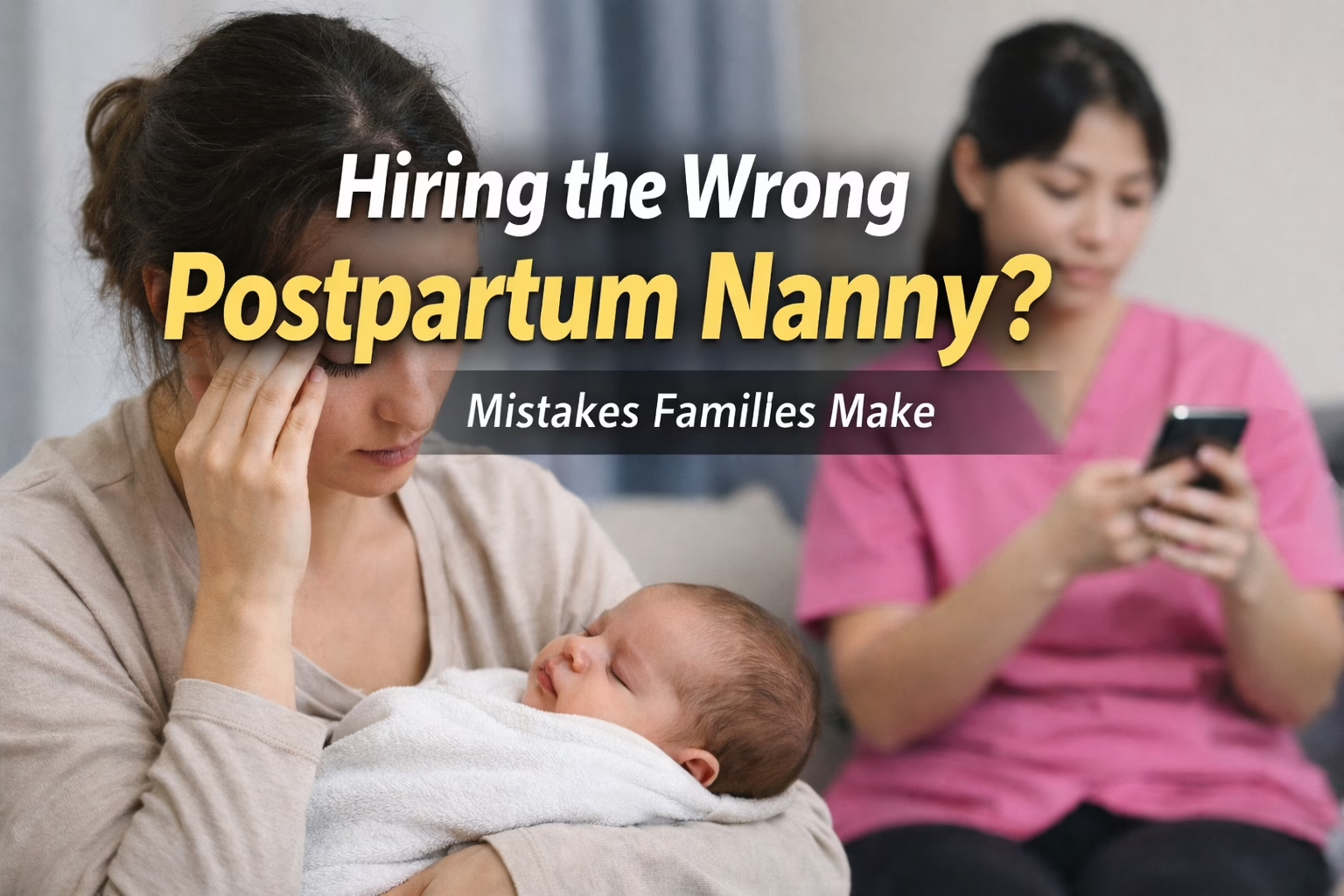
TL;DR: The biggest “wrong postpartum nanny” problems aren’t bad intentions—they’re scope mismatches.
Families think they’re hiring “postpartum care,” but they actually booked overnight-only, or newborn-only,
or meal support without newborn coverage. This guide shows what goes wrong in real homes, the warning signs to watch for,
and a simple checklist to hire confidently.
If you want to skip the guesswork and get matched with candidates based on your due date + needs:
Hire a Postpartum Nanny →
Why this guide is different (Experience-based, not generic)
- Built from real placement patterns: what families request, what they actually need, and where expectations break.
- Scope-first decision making: newborn coverage, overnight structure, meals, and recovery support are not interchangeable.
- Actionable steps: interview questions, red flags, and a “choose this if…” decision guide.
Want definitions first? Start with: Postpartum Nanny FAQ
and then compare care roles here: Postpartum Care Comparisons Hub.
What actually goes wrong when families hire the wrong postpartum nanny
Most families don’t “hire a bad caregiver.” They hire the wrong type of postpartum support for their real pain point.
The early weeks are intense: sleep deprivation, feeding logistics, recovery, hormones, visitors, and anxiety all at once.
When the caregiver’s scope doesn’t match what your home needs, the results feel like failure—even if the caregiver is skilled.
Here are the 4 mismatch patterns we see most often:
- Coverage mismatch: you needed overnight or 24/7 rhythm support, but booked daytime-only blocks.
- Scope mismatch: you expected recovery help + meals, but booked newborn-only care (or vice versa).
- Feeding mismatch: bottle, breastfeeding, pumping, or combo feeding changes the entire overnight workflow.
- Household mismatch: expectations for older child care, visitors, or “who does what” were never clarified.
If your primary goal is protecting sleep, you might actually be comparing overnight-only care options.
See: Night Nurse / Overnight Newborn Care.
If you want a complete day-to-night plan, compare roles here:
Postpartum Care Comparisons Hub.
11 common mistakes (with examples + how to fix them)
1) Hiring for “help” instead of hiring for a specific outcome
“Help” is vague. Outcomes are measurable: parents sleep 4–6 hours uninterrupted, feeding rhythm stabilizes,
mom gets consistent rest blocks, baby’s night routine becomes predictable.
A strong plan starts with your outcome and builds scope around it.
Fix: Decide your #1 outcome (sleep, feeding workflow, recovery meals, routine coaching). Then hire for that scope.
2) Assuming “postpartum nanny” means the same thing everywhere
Titles vary by region and provider. Some caregivers are newborn-only. Others include postpartum meals. Some are overnight-focused.
You can’t hire based on the label—hire based on the responsibilities.
Fix: Confirm scope in writing: newborn tasks, meals, hours, rest breaks, and what’s explicitly excluded.
3) Not clarifying day support vs overnight support (the biggest source of regret)
Daytime help improves confidence and routine building. Overnight help protects sleep and recovery. They are different services.
Many families intend to solve sleep deprivation but only book daytime coverage.
Fix: If sleep is the goal, compare overnight options here:
Night Nurse / Overnight Newborn Care
and then decide whether you need overnight-only or full postpartum coverage.
4) Underestimating how feeding method changes the entire care plan
Breastfeeding, pumping, and bottle feeding create different night workflows.
For example, if mom is breastfeeding, the caregiver can still add huge value by managing
diapering, burping, soothing, settling, and parts cleanup (as agreed).
Fix: In interviews, walk through a sample night: “When baby wakes at 2am, who does what?”
5) Expecting medical advice from non-medical caregivers
Postpartum support can be highly skilled and experience-driven, but it’s not a substitute for your pediatrician, OB, or an IBCLC.
Problems happen when families expect diagnosis or treatment decisions at home.
Fix: Use caregivers for routines + safety-minded observation; use clinicians for clinical issues.
6) Not aligning on “meals included” expectations
Postpartum meals can be a game changer—but only if the household aligns on what “meals” means:
how many meals per day, dietary restrictions, grocery plan, and whether meals are for mom only or others.
Fix: If meals matter, learn what postpartum meal support typically looks like:
Chinese Postpartum Meals.
7) Booking too late and “settling” on a mismatch
Late bookings reduce candidate choice—especially for peak due-date seasons.
Families then compromise on schedule, scope, or experience, which increases mismatch risk.
Fix: Start matching early so you can interview multiple candidates and choose the best fit.
8) Not planning the home setup for live-in postpartum care
Live-in postpartum support works best when the caregiver can rest, access the kitchen, and maintain a safe, clean newborn workflow.
If the home setup is chaotic, it affects everyone’s stress and sleep.
Fix: Prepare a simple “household preferences” sheet (sleep space, kitchen rules, visitors, quiet hours).
9) Expecting full childcare for older kids from a postpartum nanny
Postpartum nannies are typically focused on newborn care.
If a toddler also needs full coverage, families often need separate childcare support.
Fix: Clarify: “Is any older child care included? If so, how much—and when?”
10) Skipping references, verification, or “scenario-based” questions
A resume tells you what someone did. Scenarios tell you how they think.
The best interviews feel like walking through your first week at home.
Fix: Use scenario prompts (sample night, reflux baby, cluster feeding, C-section recovery, visitor stress).
11) Not budgeting properly—then cutting support too early
Families sometimes book short and then scramble when sleep deprivation hits.
Planning your budget from day one prevents rushed decisions.
Fix: Start with the cost hub:
Postpartum Nanny Costs in the U.S.
and run your dates in the:
Postpartum Care Cost Calculator.
Red flags before you book
- Vague scope: “I help with everything” without a clear newborn + overnight workflow.
- No clarity on safe sleep: cannot explain basic safe sleep setup or refuses to follow household safety rules.
- Rigid approach: insists on one method without adapting to your feeding goals or pediatric guidance.
- Boundary confusion: unclear about newborn-only focus vs older child care expectations.
- Unclear schedule: cannot explain rest breaks, overnight responsibilities, and handoff times.
If you’re still deciding which role fits, compare postpartum support types here:
Postpartum Care Comparisons Hub.
Interview questions that prevent mismatches
Use these to quickly confirm fit (copy/paste):
- Walk me through a typical night. When baby wakes at 1am/3am/5am, who does what?
- How do you handle safe sleep? What do you want in the sleep space and what do you avoid?
- How do you support different feeding styles? Breast, bottle, pumping, combo—what changes?
- What’s your soothing approach? What do you try first, second, third?
- What baby-related cleaning is included? Bottles/pump parts, baby laundry, nursery reset—what’s typical?
- If meals are included: How many meals/day? Who are meals for? How do we handle groceries/diet restrictions?
- How do you coach parents? What do you teach in week 1 so parents feel confident by week 4?
- What’s not included? Older child care, deep cleaning, errands—what boundaries should we plan around?
For more baseline definitions families often ask, see:
Postpartum Nanny FAQ.
Decision guide: choose the right kind of postpartum support
Choose a postpartum nanny if…
- You want hands-on newborn care coverage plus routines (often including overnight help).
- You want a calmer household with a consistent day-to-night workflow.
- You want support that protects mom’s rest and recovery, not just education.
Choose overnight-only newborn care (night nurse style) if…
- Your biggest pain point is sleep deprivation and you mainly need night coverage.
- You feel good about daytime routines but need help stabilizing nights.
Explore overnight options:
Night Nurse / Overnight Newborn Care.
If meals and recovery nutrition are a top priority…
Meal support is its own scope. If recovery nutrition matters to you, learn what postpartum meals look like:
Chinese Postpartum Meals.
Many families also explore full live-in postpartum care options here:
Chinese Postpartum Nanny (Yue Sao).
The hidden cost of choosing wrong (time, money, stress)
The financial cost of a mismatch is obvious (re-booking, adding coverage, lost work time). The real cost is usually:
more sleep deprivation, higher anxiety, and a longer runway to feel confident.
Good postpartum care is less about “help” and more about reducing friction every single day.
If you’re budgeting, start here:
Postpartum Nanny Costs
and use the:
Postpartum Care Cost Calculator.
Frequently Asked Questions
What are the most common postpartum nanny hiring mistakes?
The most common mistakes are: not clarifying overnight vs daytime coverage, assuming the title defines scope,
skipping feeding-workflow questions, and not confirming what’s included (like bottles/pump parts, baby laundry, or meals).
Start with definitions here:
Postpartum Nanny FAQ.
How can I tell if I hired the wrong postpartum nanny?
A clear sign is that your main pain point (sleep, feeding workflow, recovery, routines) isn’t improving after the first adjustment week.
It usually means scope mismatch, not “bad care.” Re-check whether you needed overnight coverage:
Night Nurse / Overnight Newborn Care,
or a broader postpartum plan.
Is a night nurse the same as a postpartum nanny?
Not always. Many night nurses focus on overnight newborn care. A postpartum nanny is typically broader—supporting
newborn routines across day and night and protecting postpartum recovery rhythms. Compare roles here:
Postpartum Care Comparisons.
What should I ask in a postpartum nanny interview?
Ask scenario questions: “Walk me through a typical night,” “How do you support my feeding plan,” “How do you set up safe sleep,”
and “What’s included vs not included?” You can also review our planning pages:
Postpartum Nanny Costs
and the
Postpartum Care Cost Calculator.
How do I avoid hiring the wrong postpartum nanny?
Define your top outcome (sleep, feeding workflow, meals, recovery support), then hire for the scope that matches.
Interview with a sample-night walkthrough and confirm responsibilities in writing.
If you want help matching, start here:
Hire a Postpartum Nanny.
Want to avoid the mismatch and hire confidently?
We match families based on due date, location, newborn-care needs, feeding plan, and whether you want
overnight support, live-in coverage, or postpartum meals.
Start here: Hire a Postpartum Nanny →
·
See costs
·
Use the cost calculator
Prefer to talk first? Call (626) 537-1191 (M–F 9am–5pm, Sat 10am–4pm PST).