
Postpartum Doula vs. Confinement Nanny: How to Choose the Right Support After Birth
A postpartum doula and a confinement nanny both support new mothers after birth — but they fill very different roles. A postpartum doula provides part-time emotional, physical, and educational support during daytime visits, typically for a few hours at a time. A confinement nanny (yue sao) lives with the family full-time for 26 to 40+ days, handling all meals, overnight newborn care, breastfeeding support, and culturally specific recovery practices. The biggest practical difference is scope: a confinement nanny is the only option that combines live-in newborn care, traditional postpartum meals, overnight support, and breastfeeding help into a single full-time role.
TL;DR — What You Need to Know
- Postpartum doula: Part-time daytime visits focused on emotional support, breastfeeding guidance, light newborn help, and maternal education. Does not live in. Does not cook confinement meals. Does not provide overnight care as a standard service.
- Confinement nanny: Full-time live-in caregiver for 26–40+ days. Handles all confinement meals, overnight newborn care, breastfeeding support, baby bathing, and recovery guidance. Dedicated exclusively to the mother and newborn — not older children.
- Which to choose: Depends on what you need most — emotional guidance and education (doula), or hands-on 24/7 newborn care and meal preparation (confinement nanny). Some families use both.
This guide explains what each role involves, where they overlap, how they differ, and how to decide which type of postpartum support is right for your family.

What Is a Postpartum Doula?
A postpartum doula is a trained support professional who helps new mothers during the weeks after childbirth. The word “doula” comes from the Greek for “a woman who serves,” and the role centers on emotional guidance, education, and light practical assistance — not hands-on medical care or full-time newborn management.
Postpartum doulas typically visit the family’s home for a few hours at a time, several days per week. During these visits, a doula may provide emotional reassurance and a calming presence during a difficult adjustment period, help with breastfeeding initiation and positioning, offer evidence-based information on newborn care and postpartum recovery, assist with light household tasks like laundry or meal prep, and help the mother recognize signs of postpartum depression or anxiety that should be discussed with a doctor.
Most postpartum doulas are certified through organizations like DONA International or CAPPA, which require specific training hours, mentored postpartum support experiences, and continuing education. Doulas do not diagnose conditions, prescribe treatments, or provide medical care — their role is supportive and educational.
What a doula typically does not provide is also important to understand. Most postpartum doulas do not cook full meals (they may reheat or prepare simple snacks), do not handle overnight newborn care as a standard service, and do not manage the baby around the clock. Their model is designed around focused, time-limited visits — not continuous live-in coverage.
The American College of Obstetricians and Gynecologists (ACOG) recognizes continuous support during labor and the postpartum period as beneficial for maternal outcomes. A 2022 review published in Nutrients further found that adequate protein, iron, and fluid intake during the postpartum period supports both physical recovery and lactation — underscoring the importance of nutrition as a central element of postpartum care, whether provided by a doula, a confinement nanny, or the family itself.

What Is a Confinement Nanny?
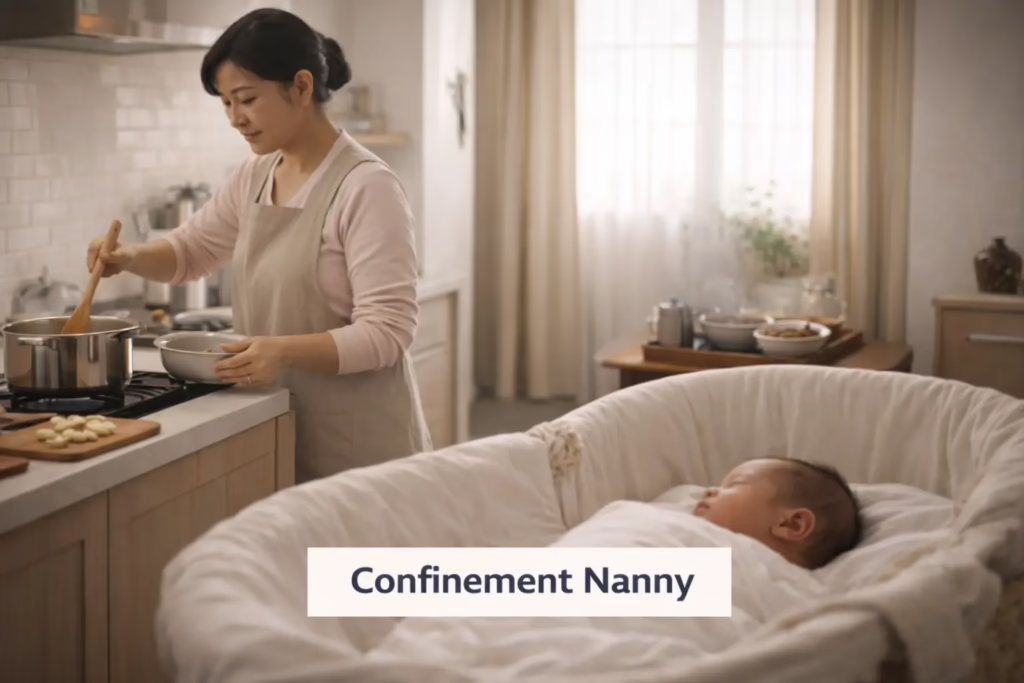
A confinement nanny — also called a yue sao (月嫂) — is a live-in caregiver who specializes in postpartum recovery and newborn care during the Chinese confinement period. She lives with the family full-time for 26 to 40 or more days and handles all aspects of the mother’s recovery and the newborn’s daily care.
What a confinement nanny typically manages includes all confinement meals (three meals plus two to three soups or herbal teas per day, tailored to the mother’s recovery stage), newborn care around the clock including bathing, diapering, swaddling, umbilical cord care, and soothing, overnight baby care so the mother sleeps in longer stretches between feeds, breastfeeding and pumping support including positioning and lactation-boosting foods, baby laundry and bottle and pump cleaning, and practical recovery guidance based on experience with hundreds of postpartum families.
A confinement nanny’s role is dedicated exclusively to the newborn and the mother’s recovery. She does not provide care for older children — families with siblings should arrange a separate caregiver. She is not a medical provider and does not diagnose conditions or prescribe treatments.
For a detailed look at what a confinement nanny does day by day, see what a Chinese postpartum nanny does.
Side-by-Side Comparison
The table below summarizes the key differences. The most important distinction is not any single line item — it is the overall model. A doula visits. A confinement nanny lives in.
| Postpartum Doula | Confinement Nanny (Yue Sao) | |
|---|---|---|
| Live-in? | No — daytime visits only | Yes — full-time, 24/7 |
| Typical duration | A few weeks (part-time hours) | 26–40+ days (full-time live-in) |
| Overnight newborn care | Not standard | Yes — every night |
| Meal preparation | Light meal prep or reheating | All confinement meals, soups, herbal teas — 3 meals + 2–3 additional servings per day |
| Newborn care | Light support and education | Full hands-on care — bathing, diapering, swaddling, soothing, overnight monitoring |
| Breastfeeding support | Yes — education and positioning | Yes — positioning, pumping schedules, lactation-boosting meals |
| Emotional support | Yes — primary focus | Yes — through practical relief and recovery guidance |
| Cultural recovery practices | No | Yes — TCM-based warming foods, confinement diet, warmth practices |
| Training model | Certified programs (DONA, CAPPA) | Apprenticeship + hands-on experience with postpartum families |
| Household help | Light tasks during visits | Baby laundry, bottle/pump cleaning, nursery and kitchen tidying |
How to Decide Which Support Is Right for Your Family
The right choice depends on what you need most during the first month after birth. Here is how most families think through the decision:
A postpartum doula may be the better fit if you have family nearby who can help with meals and overnight baby care, you primarily want emotional guidance and someone to talk through the adjustment to parenthood, you are comfortable managing most newborn care yourself but want periodic expert check-ins, or your budget is more limited and you prefer paying for a few hours at a time rather than a full-time live-in arrangement.
A confinement nanny may be the better fit if you want overnight newborn care so the mother can sleep in longer stretches, you want all meals handled — especially if you want traditional confinement foods prepared daily, you do not have extended family nearby to help, you are recovering from a cesarean delivery and need more hands-on physical support, you want a single person managing all newborn care, meals, and recovery support around the clock, or you value the structure of a daily confinement routine rather than managing everything yourself.
In the families we work with, the decision usually comes down to one practical question: what does the first night home look like? Mothers who have overnight support from day one consistently describe a different recovery trajectory than those who do not — more sleep, faster physical healing, and less anxiety about whether the baby is safe while they rest. A doula provides wonderful guidance during daytime hours, but she goes home at the end of her visit. A confinement nanny is there when the baby wakes at 2 a.m.
It is also worth noting that many mothers do not know what they will need until the baby arrives. A planned vaginal delivery may become a cesarean. Breastfeeding may be more difficult than expected. The emotional adjustment may feel heavier than anticipated. A live-in confinement nanny provides a safety net for all of these scenarios because she is present continuously — not just during scheduled visit windows.
💡 What we hear from families
The families who feel most confident in their choice are the ones who thought honestly about one question: Who is going to handle the nights? If the answer is “no one” or “we will figure it out,” that is the single biggest gap a confinement nanny fills. Doulas provide wonderful daytime support — but sleep deprivation in the first month affects everything else.
Can You Use Both a Doula and a Confinement Nanny?
Yes — and some families do. The most common arrangement we see is a confinement nanny for the first 26 to 40 days, handling all hands-on newborn care and meals, combined with a postpartum doula who visits periodically for emotional support and breastfeeding education. The two roles complement each other well because they focus on different dimensions of recovery.
Other families use a confinement nanny for the first month and then transition to a night nurse for the second month while the mother takes over daytime care. Others rely entirely on one type of support. There is no single right answer — your needs may shift once you are home with the baby, and that is completely normal.
How Do Costs Compare?
Postpartum doulas and confinement nannies are priced very differently because the service models are different.
A postpartum doula typically charges by the hour or by a package of visits. Rates vary by region and experience, but most families spend between $30 and $65 per hour, or $500 to $2,500 for a multi-visit package over several weeks. The total depends on how many hours per week you book.
A confinement nanny is a full-time live-in engagement. Costs depend on the nanny’s experience, the length of the booking, and your location. For detailed pricing, see our guide to confinement nanny costs. Because the nanny lives in and provides 24/7 coverage — including all meals, overnight care, and breastfeeding support — the total investment is higher. But many families find that when they compare the cost of assembling the same coverage from multiple providers (a doula, a night nurse, a meal service, a lactation consultant), a single confinement nanny often delivers more comprehensive support at a comparable or lower total cost.
The question is not which is “cheaper” in isolation — it is which model delivers the support you actually need. A few hours of doula visits per week and a full-time live-in confinement nanny solve very different problems.
Frequently Asked Questions
What is the difference between a postpartum doula and a confinement nanny?
A postpartum doula visits part-time during the day to provide emotional support, breastfeeding education, and light practical help. A confinement nanny lives with the family full-time for 26–40+ days and handles all meals, overnight newborn care, breastfeeding support, and recovery guidance. The key difference is that a confinement nanny provides 24/7 hands-on care, while a doula provides periodic visits.
Do postpartum doulas provide overnight care?
Overnight care is not a standard part of the postpartum doula model. Some doulas offer overnight shifts as an add-on service, but this is the exception rather than the norm. If overnight newborn care is a priority, a confinement nanny or a night nurse is typically a better fit.
Do I need a confinement nanny if I already have a doula?
It depends on what gaps remain. If your doula visits a few hours per day but no one is handling overnight feeds, meal preparation, or full-time newborn care, a confinement nanny fills those gaps. Some families use both — the doula for emotional support and the nanny for hands-on daily and overnight care.
Is a confinement nanny only for Chinese families?
No. The core services — live-in newborn care, meal preparation, overnight support, and breastfeeding help — benefit families of any cultural background. We regularly work with mixed-culture families and non-Chinese families who value the structured recovery support. For more on this, see what is Chinese confinement.
Can a confinement nanny also help with older children?
No. A confinement nanny’s role is dedicated exclusively to the newborn and the mother’s recovery. Families needing care for older siblings should arrange a separate caregiver. This is one of the most common planning details families ask about, and it is important to set up before the baby arrives.
How early should I book a confinement nanny?
Experienced confinement nannies are often booked two to four months in advance, especially during peak birth seasons in spring and fall. For more timing guidance, see when to start booking a confinement nanny.
Ready to Find a Confinement Nanny?
If you are expecting and want live-in postpartum support — including overnight newborn care, confinement meals, and breastfeeding help — we can match you with an experienced confinement nanny. My Asian Nanny is a referral agency — we connect families with carefully vetted live-in caregivers across California and nationwide.
Related Reading
- Doula vs. Confinement Nanny — What’s the Difference?
- What Is a Confinement Nanny? Complete Overview
- How to Hire a Confinement Nanny
- Confinement Nanny Costs: What to Expect
- What Is a Night Nurse?
- Postpartum Confinement Rules: What to Follow and Avoid
- Chinese Postpartum Meals: What to Eat for Recovery