
Chinese Postpartum Tradition: The Origins, Practices, and Modern Evolution of Zuo Yue Zi
The Chinese postpartum tradition — known as 坐月子 (zuò yuè zi), or “sitting the month” — is a structured recovery period observed by families after childbirth. For roughly 30 to 40 days, the mother rests at home, eats warming and nutrient-dense meals, avoids cold exposure, and receives dedicated support so she can focus entirely on healing and bonding with her newborn. The tradition has been practiced across Chinese and broader East Asian cultures for over two thousand years, and today it is followed — in full or adapted form — by families of many cultural backgrounds around the world.
TL;DR — What You Need to Know
- What it is: A centuries-old Chinese postpartum recovery tradition centered on rest, warming foods, warmth, and dedicated support during the first 30–40 days after birth.
- Where it comes from: Rooted in Traditional Chinese Medicine principles around restoring blood and qi (vital energy) lost during childbirth. Similar traditions exist across Latin American, South Asian, Southeast Asian, and Middle Eastern cultures.
- How modern families practice it: Most follow the core principles — rest, nourishment, warmth — while adapting stricter rules around bathing, diet, and activity to their own comfort level and their doctor’s guidance.
- Who follows it: Families of Chinese heritage, mixed-culture households, and increasingly, non-Chinese families who value the structured recovery support the tradition provides.
This page explains where the tradition comes from, what it involves in practice, how it has evolved for modern families, and why postpartum recovery traditions like zuo yue zi are gaining wider recognition — including from Western medical organizations that now emphasize many of the same principles.
Where the Chinese Postpartum Tradition Comes From
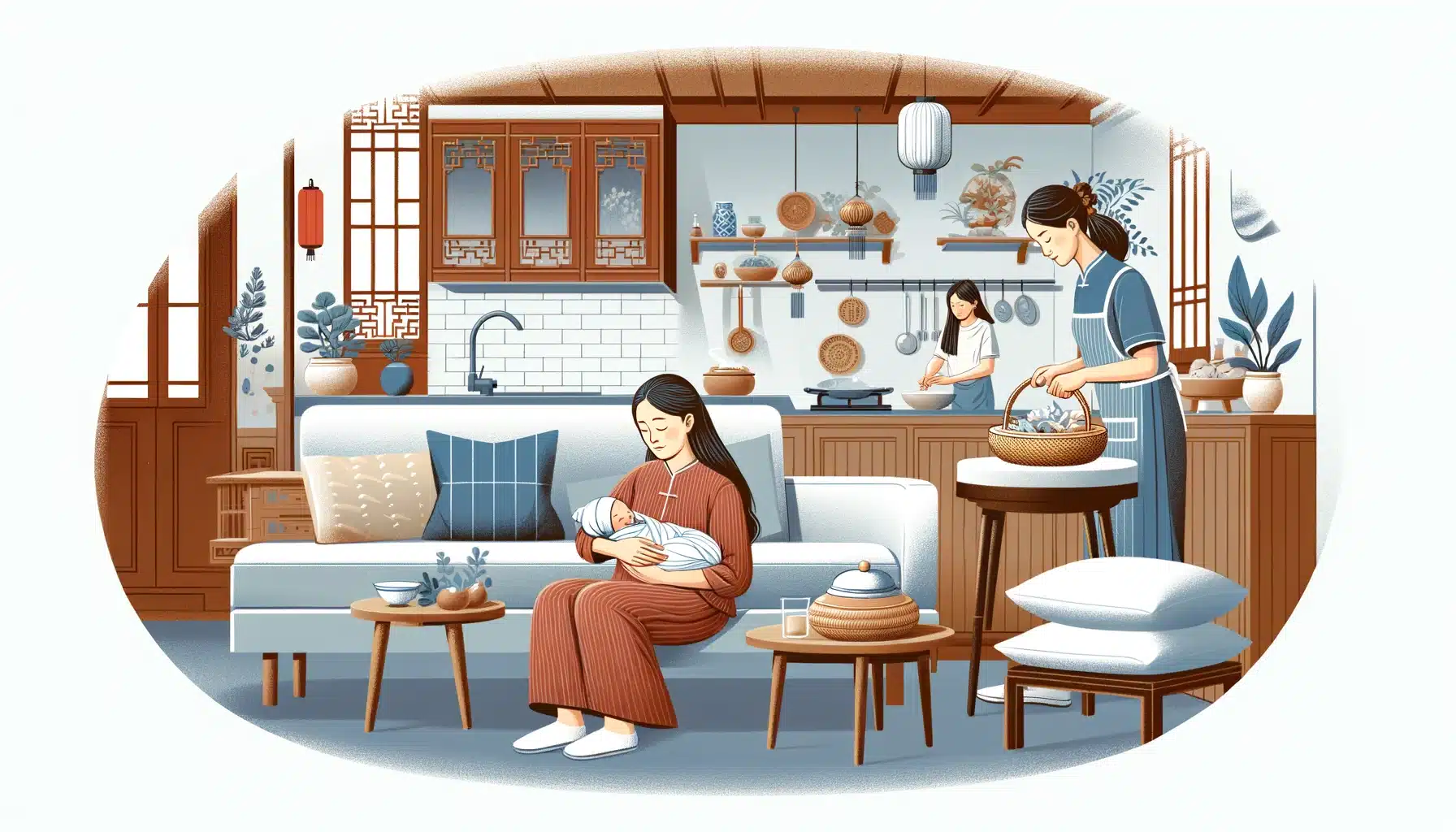
The practice of zuo yue zi dates back more than two thousand years. The earliest written references appear in Chinese medical texts from the Han Dynasty (206 BCE–220 CE), where the postpartum period was described as a time of significant physical vulnerability — a state in which the mother’s body had lost substantial blood and qi during labor and needed careful restoration.
Traditional Chinese Medicine (TCM) provides the framework behind the tradition. In TCM, childbirth depletes the mother’s yang energy and leaves the body in a “cold” and weakened state. The confinement practices — warming foods, rest, avoiding cold exposure, and receiving dedicated care — are all designed to restore balance, rebuild strength, and prevent long-term health problems believed to result from inadequate recovery.
These principles were not unique to one region of China. Variations of zuo yue zi developed across different provinces and dialects, each with slightly different dietary customs and strictness levels. What remained consistent was the core belief: the first month after birth is a protected recovery period, and the mother should not carry the burden of household work, childcare decisions, or daily errands during that time.
Over centuries, the tradition was passed from mothers to daughters and reinforced by extended family structures where grandmothers, aunts, and elder relatives provided the hands-on support that made confinement possible. In modern families — especially those living far from extended family — a confinement nanny (yue sao) often fills this role.
What the Tradition Involves
The Chinese postpartum tradition centers on four pillars: rest, warmth, nourishment, and support. Every specific practice connects back to one or more of these principles.
Rest
The mother stays home — ideally in bed or resting — for most of the confinement period. Physical activity is limited to gentle movement. Household chores, errands, and caring for older children are handled by others. The goal is to give the body uninterrupted time to heal from labor and delivery. For a detailed breakdown of what mothers are encouraged to do and avoid, see our guide to Chinese postpartum confinement rules.
Warmth
TCM holds that cold enters the body more easily during the postpartum period and can lead to joint pain, fatigue, or digestive problems later in life. Mothers are encouraged to wear socks, keep the abdomen covered, avoid drafts, and limit exposure to cold water and cold environments. Many families keep windows closed or limit air conditioning, particularly in the first two weeks.
Nourishment
Diet is one of the most distinctive elements of the tradition. Meals are designed to restore blood, support milk production, and warm the body from the inside. Common confinement foods include sesame oil chicken, pork bone broth, fish soup, ginger-based dishes, red date tea, and rice wine-infused recipes. Cold foods, raw vegetables, and iced drinks are traditionally avoided. For a full look at what families eat during this period, see Chinese postpartum meals and confinement foods.
Support
The tradition assumes the mother will not recover alone. Historically, this support came from extended family. Today, many families — particularly those without nearby relatives — hire a live-in yue sao (confinement nanny) who manages all meals, newborn care, and overnight feeds so the mother can focus entirely on rest and bonding. The nanny’s role is dedicated exclusively to the newborn and the mother’s recovery — she does not provide care for older children, and families with siblings should arrange a separate caregiver.
Similar Traditions Around the World
The Chinese postpartum tradition is one of the most structured, but it is far from the only culture that treats the weeks after childbirth as a protected recovery period. Similar practices appear across many traditions worldwide.
Latin America: La cuarentena (the quarantine) is a 40-day postpartum rest period observed in many Latin American countries. Mothers are encouraged to stay home, eat nourishing foods, and receive help from family members — principles that closely parallel zuo yue zi.
South Asia: In Indian and Pakistani families, jaapa (also called chilla) involves 40 days of rest, special meals prepared by the mother’s family, oil massages, and restricted activity. The mother typically returns to her parents’ home for this period.
Southeast Asia: Malaysian and Indonesian families observe pantang, which includes dietary restrictions, herbal baths, abdominal binding, and rest periods that can last 30 to 44 days depending on the family’s tradition.
Middle East: Many Arab families follow a 40-day postpartum rest period where the mother is cared for by female relatives, eats restorative foods, and limits visitors and physical activity.
The shared thread across all of these traditions is the belief that the postpartum period requires dedicated recovery time, nourishing food, and consistent support — not just for the baby, but for the mother.
Why Modern Families Still Follow This Tradition
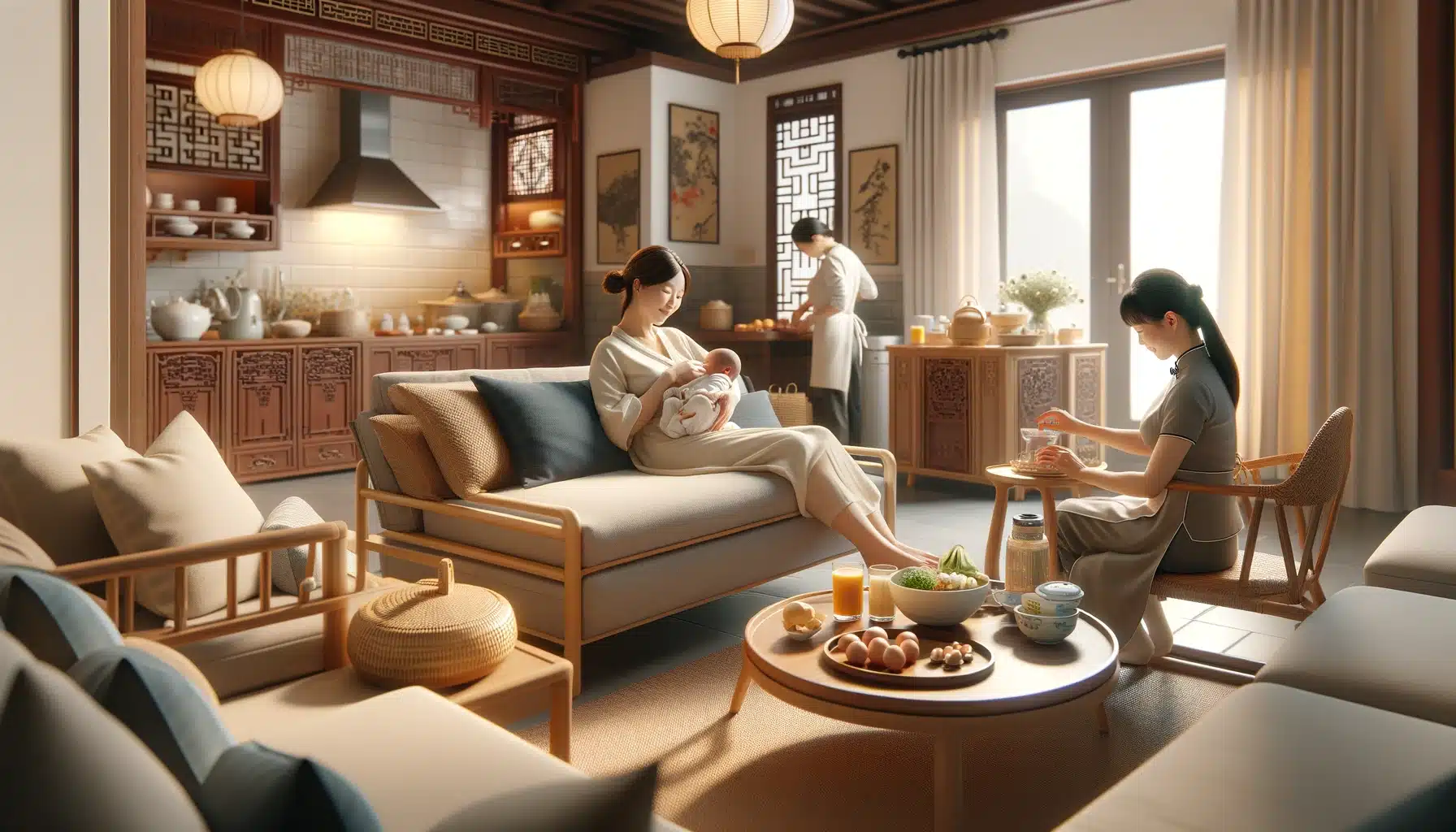
The Chinese postpartum tradition has endured not because families feel obligated, but because the core principles work. Mothers who receive structured rest, consistent nourishment, and hands-on support during the first month consistently report feeling stronger and more confident as they transition into parenthood.
Modern medicine increasingly supports many of the same principles. The American College of Obstetricians and Gynecologists (ACOG) emphasizes the importance of rest, nutrition, and support during the postpartum period. A 2022 review published in Nutrients found that adequate protein, iron, and fluid intake during the postpartum period supports both physical recovery and lactation — principles that align closely with traditional confinement diets.
For many families, the tradition also provides something that modern postpartum advice often lacks: a clear daily structure. Rather than vague instructions to “rest when you can,” confinement gives the first month a predictable rhythm — meals are prepared, the baby is cared for, overnight support is built in, and the mother’s only job is to heal. In the hundreds of families we have worked with, this structure is what mothers most consistently say made the difference in their recovery.
💡 What we hear from families
The families who are happiest with their confinement experience are the ones who focused on the principles — rest, nourishment, support — rather than trying to follow every traditional rule perfectly. Flexibility is not a compromise. It is how the tradition has always adapted across generations.
How the Tradition Has Evolved
Traditional zuo yue zi, practiced strictly, included rules that many modern families choose to adapt. In its strictest form, the mother would not shower or wash her hair for the full 30 to 40 days, would not leave the house, would avoid all cold foods and drinks, and would limit reading and screen time to rest her eyes.
Today, most families follow a modified version. Common adaptations include showering daily with warm water in a warm bathroom, washing hair once or twice a week with immediate blow-drying, incorporating some fresh fruits or preferred foods alongside traditional warming meals, taking short walks in mild weather after the first week or two, and allowing close family to visit briefly while keeping the first week or two quieter.
These adaptations reflect the same shift happening across many traditional practices: the underlying principles are preserved while the specific rules bend to fit modern life. A mother can maintain the warmth principle without avoiding bathing entirely. She can eat nourishing confinement meals while also having the occasional fruit she is craving. The tradition is a framework, not a rigid set of laws.
After a cesarean delivery, the tradition often extends and becomes more cautious. The surgical incision requires additional rest — most doctors advise against lifting anything heavier than the baby for at least six weeks. Many families who originally planned a 26-day booking extend to 40 days or longer after a C-section. For more on how long families typically observe confinement, see how long to book a confinement nanny.
The Role of a Confinement Nanny in the Tradition
Historically, the mother’s own mother or mother-in-law provided the hands-on support that made confinement possible — cooking meals, caring for the baby overnight, managing visitors, and keeping the household running. In modern families, especially those living far from extended relatives or in a different country, a professional confinement nanny (月嫂, yuè sǎo) fills this role.
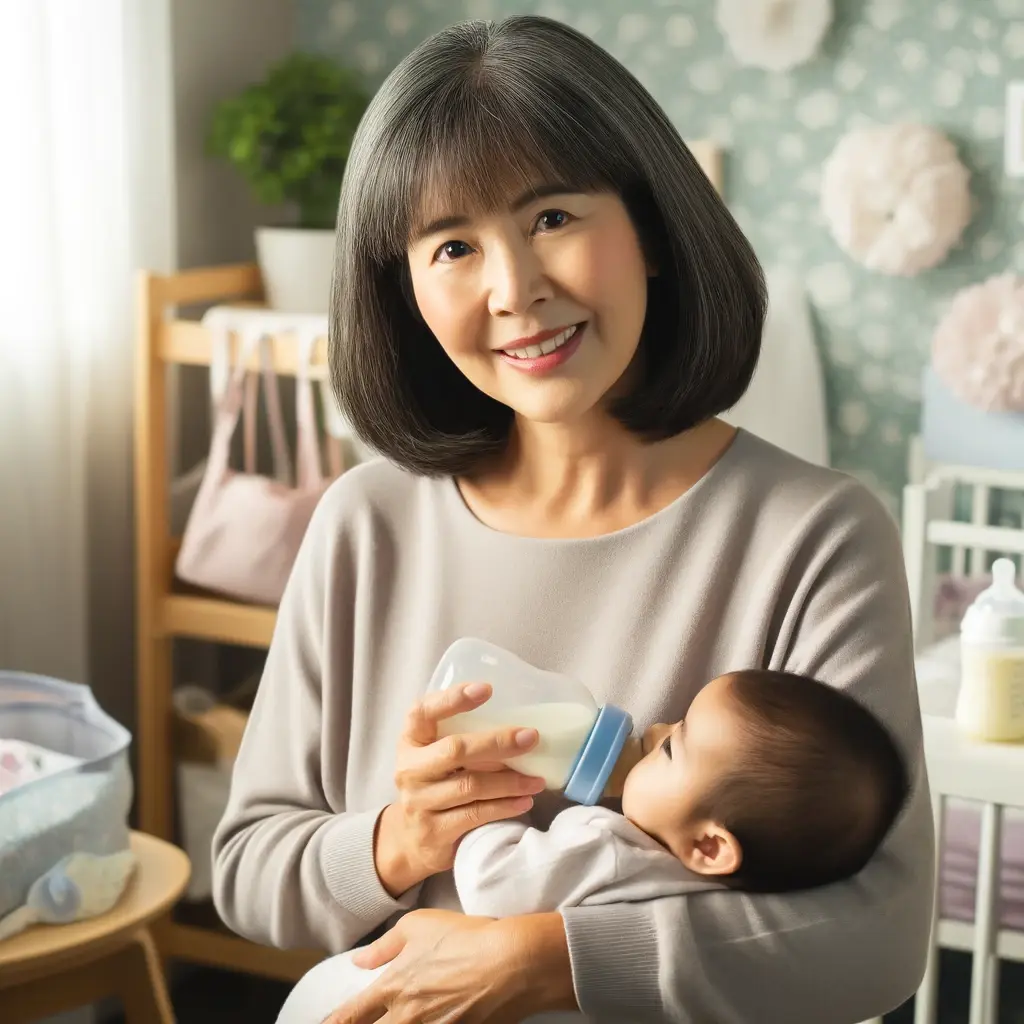
A confinement nanny lives with the family full-time during the confinement period and handles all meals (typically three meals plus two to three soups or teas per day), newborn care around the clock including overnight feeds and diaper changes, breastfeeding support and positioning guidance, baby bathing and umbilical cord care, light household tasks related to the baby and mother, and practical recovery guidance based on experience with hundreds of families.
The nanny does not replace a doctor or medical provider. She does not diagnose conditions, prescribe treatments, or offer medical advice. But an experienced yue sao who has supported many postpartum recoveries will often recognize when something seems off and will encourage the mother or her partner to contact their healthcare provider promptly.
For many families, having a confinement nanny is what makes the tradition practical. Without nearby family, the alternative is the mother managing her own recovery, meals, and a newborn simultaneously — which is the opposite of what the tradition is designed to prevent. To learn more about hiring, costs, and what to expect, see our pages on how to hire a confinement nanny and confinement nanny costs.
Is This Tradition Only for Chinese Families?
No — and this is one of the most common questions we hear. The core principles of the Chinese postpartum tradition — rest, nourishing meals, warmth, and dedicated live-in support — benefit families of any cultural background.
We regularly work with mixed-culture families where one partner has Chinese heritage and the other does not. We also work with non-Chinese families who learned about confinement through friends, online research, or their own cultural traditions and want the structured recovery support a live-in nanny provides. The tradition translates well because the underlying needs — sleep, nutrition, help with the baby, and time to heal — are universal.
What varies is how strictly families follow the cultural practices. Some non-Chinese families adopt the full dietary tradition. Others focus primarily on the practical support — overnight newborn care, meal preparation, and breastfeeding help — without following TCM-specific guidelines around warmth or food temperature. Both approaches are completely normal, and a good confinement nanny adapts to whatever the family needs.
The World Health Organization (WHO) emphasizes that all new mothers benefit from adequate rest, nutrition, and emotional support in the postpartum period. The Chinese postpartum tradition simply provides a centuries-old framework for delivering exactly that.
Frequently Asked Questions
What does “sitting the month” mean?
“Sitting the month” is the literal English translation of 坐月子 (zuò yuè zi). It refers to the practice of the mother resting at home — largely in bed — for the first month after giving birth. The name reflects the central principle: the mother’s primary activity during this period is recovery, not housework or errands.
How long does the Chinese postpartum tradition last?
Most families observe 26 to 40 days. The traditional standard is one full lunar month (about 30 days), though many families extend to 40 days or longer — especially after a cesarean delivery or if the mother’s recovery is slower than expected. Some families observe up to 100 days. There is no single correct duration.
Is the postpartum tradition the same as the 5-5-5 rule?
Not exactly. The 5-5-5 rule covers the first 15 days after birth — five days in bed, five days on the bed, five days near the bed. The Chinese postpartum tradition is longer (30–40+ days) and includes specific dietary, warmth, and cultural practices beyond activity restrictions. The 5-5-5 rule can be thought of as the opening phase of a full confinement period.
Do I have to follow every traditional rule?
No — and most families do not. The tradition is a framework, not a rigid set of requirements. Most modern families follow the core principles (rest, warmth, nourishing meals, dedicated support) while adapting specific rules to their comfort level and their doctor’s guidance. An experienced confinement nanny can help you decide which practices matter most to your family.
What if my family has strong opinions about how strictly to follow the tradition?
This comes up frequently — especially when grandparents feel strongly about certain rules. The most effective approach is to discuss preferences before the baby arrives, ideally during the third trimester. A confinement nanny who has worked with many families can often bridge generational differences calmly and without conflict.
Ready to Plan Your Confinement?
If you are expecting and want the structured recovery support the Chinese postpartum tradition provides, we can help you find an experienced confinement nanny matched to your family’s preferences, dietary needs, and schedule. My Asian Nanny is a referral agency — we connect families with carefully vetted live-in caregivers across California and nationwide.