
Chinese Confinement Nanny (Chinese Postpartum Nanny): What She Does, Costs and How to Hire
A Chinese confinement nanny moves into your home after the birth and runs zuò yuè zi for you: overnight newborn care, warming confinement meals and support for your recovery. This guide covers what she does day to day, how we match you with one and what it costs.
★ Trusted since 2011
★ Background Checked & Vetted
🛡 60-90 Day Replacement Guarantee
📍 California & Nationwide

Quick Answer
A Chinese confinement nanny — also called a Chinese postpartum nanny, or a yue sao (月嫂) in Mandarin — is a live-in caregiver who provides 24/7 newborn care, maternal recovery support and traditional confinement meal preparation for 26 to 40 days after birth. She handles overnight feeds, diaper changes, breastfeeding guidance, postpartum meals and light baby-related housekeeping so you can rest and recover. My Asian Nanny has matched over 1,000 families with experienced confinement nannies across California and nationwide.
Why the First Month After Birth Is So Hard Without Help
The first month after having a baby is one of the hardest transitions a family will face. Sleep deprivation. Physical recovery. Learning how to care for a newborn while hormonal shifts affect mood, energy, and confidence. Most families do not have the support system they need — and they feel it immediately.
A Chinese postpartum nanny changes that equation entirely. She moves into your home before or shortly after delivery and takes on the overnight care, the feeding support, the cooking, and the newborn management that would otherwise fall on exhausted new parents. The result: you sleep more, heal faster, breastfeed more successfully, and actually have the capacity to bond with your baby instead of just surviving. Research from the American College of Obstetricians and Gynecologists confirms that adequate sleep and support in the postpartum period significantly reduces the risk of postpartum depression and improves maternal outcomes.
At My Asian Nanny, we are a referral agency that matches families with experienced, independent yue sao based on your needs, timeline, location, and preferences. We have been placing confinement nannies for over 10 years across California and nationwide. This guide covers exactly what a Chinese postpartum nanny does, how the hiring process works, what it costs, and how to decide whether this investment is right for your family.
What a Chinese Postpartum Nanny Is — and Why Families Hire One
A Chinese postpartum nanny is a specialized live-in caregiver trained in both newborn care and traditional Chinese postpartum recovery practices. In Mandarin, she is called a 月嫂 (yuè sǎo) — literally “moon sister-in-law” — a title that reflects the traditional 30-day confinement period she supports. In Cantonese communities, she may be called a 陪月 (pui yuet).
Unlike a general babysitter or nanny, a yue sao is specifically trained for the postpartum period. Her expertise covers four areas: 24/7 newborn care, the mother’s physical and emotional recovery, preparation of traditional Chinese confinement meals, and light baby-related household support. She lives in your home for the duration of the confinement period — typically 26 to 40 days — providing round-the-clock care that allows new parents to actually rest.
This is not a luxury service reserved for wealthy families. It is a deeply practical investment in recovery. Almost every family we work with says the same thing after their confinement period ends: the overnight support alone was worth it. The ability to sleep in four- to six-hour stretches during the first month — instead of waking every two hours — changes the entire recovery experience. A 2019 study published in the Journal of Clinical Sleep Medicine found that fragmented sleep in the postpartum period was associated with impaired cognitive function, increased depressive symptoms, and slower physical recovery.
What a Chinese Confinement Nanny Does: Four Areas of Care
1. Newborn Care — Around the Clock
Newborn care is the core of what a Chinese postpartum nanny does. From the moment she arrives, she takes on the hands-on daily care of your newborn — overnight and during the day. This includes feeding (bottle preparation, breastfeeding positioning support, and supplementing if needed), diaper changes, bathing, swaddling, soothing, monitoring temperature, umbilical cord stump care, and interpreting your baby’s cries.
At night, the yue sao handles feeds and diaper changes so parents can sleep. This is not occasional help — it is full overnight coverage. She sleeps near the baby and responds to every wake-up. For breastfeeding mothers, she brings the baby to you for nursing and handles everything before and after — burping, diaper change, settling the baby back to sleep. According to the American Academy of Pediatrics, consistent nighttime caregiving routines help establish healthier infant sleep patterns within the first month of life.
Newborn Sleep Routines During Confinement
During the traditional confinement period, one of the most important responsibilities of a confinement nanny is helping establish healthy newborn sleep habits. Because newborns wake frequently for feeding and comfort, many parents feel overwhelmed trying to create a routine on their own.
Parents can use our newborn sleep schedule generator to understand typical newborn wake windows and see a sample baby sleep schedule based on age. This helps families better visualize what a newborn’s day might look like during the first months.While every baby develops their own rhythm, having a general newborn sleep schedule can make the early weeks feel more manageable and help parents decide if additional overnight support would be helpful.

What Families Tell Us
“The overnight care was the single most valuable part. We could actually sleep, and we felt like completely different people by week two.” This sentiment appears in nearly every post-placement feedback we receive across our 1,000+ family placements.
2. Mother’s Physical and Emotional Recovery
A yue sao is not a doctor or nurse, and she does not diagnose or prescribe. But she is experienced in supporting the physical realities of postpartum recovery — helping you manage soreness, navigate breastfeeding challenges, maintain hygiene after a C-section or vaginal delivery, and follow the traditional confinement recovery guidelines that support healing.
Just as importantly, she provides emotional presence. The early postpartum weeks are isolating. Having another adult in the house — one who has seen hundreds of families through this same phase — provides reassurance that what you are experiencing is normal, that your baby is healthy, and that the exhaustion is temporary. That reassurance is not something you can find in a book or an app. The National Institute of Mental Health identifies social support and adequate rest as two of the most protective factors against perinatal mood disorders — both of which a yue sao directly provides.
3. Confinement Meal Preparation
Traditional Chinese confinement meals are a cornerstone of postpartum recovery in Chinese culture. A yue sao prepares three full meals and two to three soups and teas per day — all from scratch, using warming ingredients, medicinal herbs, and nutrient-dense proteins designed to support healing, milk production, and energy restoration.
Meals are tailored to where you are in your recovery. The first week emphasizes gentle, easily digestible foods. By week two, blood-building and energy-restoring ingredients are introduced — red dates, goji berries, black sesame, ginger, and bone broths feature heavily. Week three and beyond focuses on sustained nutrition and milk supply support. An experienced yue sao adjusts based on your appetite, your breastfeeding, and how your body is responding. For a deeper look at what these meals include, see our complete guide to Chinese postpartum meals.

4. Light Baby-Related Household Support
A Chinese confinement nanny is not a housekeeper. Her work stays with the baby and the mother, and the chores she takes on are the ones that serve them: baby laundry, sterilizing bottles and pump parts, keeping the nursery in order, and cleaning the kitchen after each round of soups and meals.
That narrow scope is deliberate. In a traditional confinement household the mother’s own mother or mother-in-law did this job, and nobody expected her to vacuum the living room. The same rule applies here: her time goes to your newborn and your recovery, not to general housework.
Ready to Find Your Postpartum Nanny?
Start your search in minutes. Our team will match you with screened, experienced candidates. Before placement, every postpartum nanny must have a Tdap vaccination, a current-season flu shot and a recent TB screening.
Quick & easy to get started · 60–90 day replacement guarantee · Families nationwide
A Typical Day with a Chinese Confinement Nanny
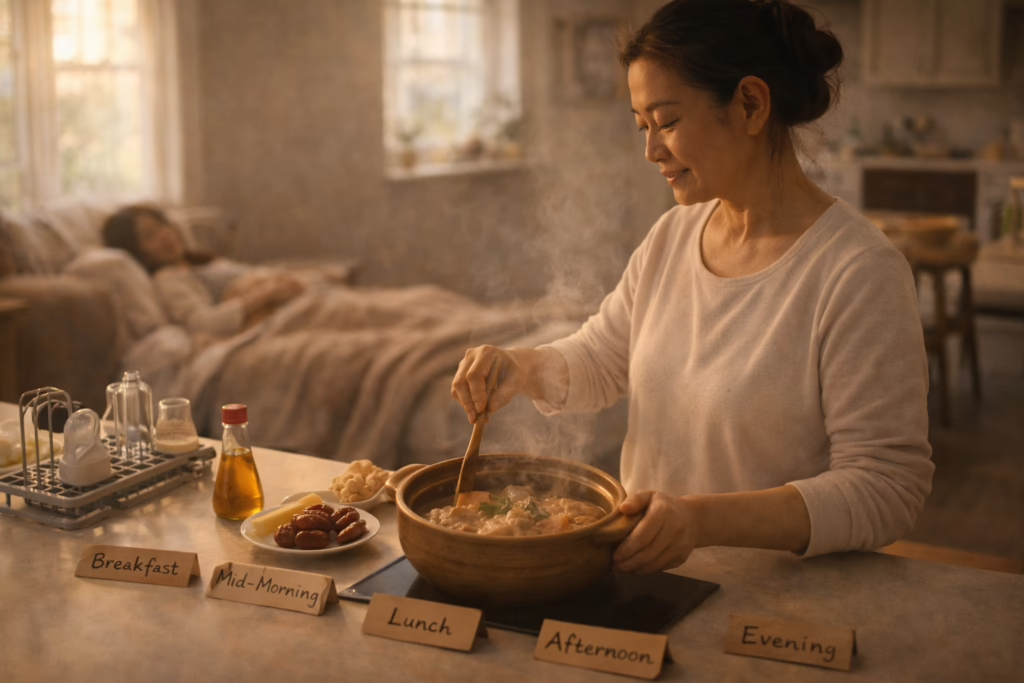
Every household runs confinement a little differently, but most of our placements settle into a rhythm close to this one:
Overnight · 10 PM – 6 AM
She takes every overnight wake-up. If you are breastfeeding she brings the baby to you, then burps, changes and settles him so you can go straight back to sleep; with formula or pumped milk she handles the feed herself. A pot of red date and ginger tea stays warm by the bed in place of cold water, which confinement traditionally rules out.
Morning · 6 AM – 12 PM
Breakfast is usually millet congee cooked with red dates or goji berries, with a black sesame soup later in the morning. She bathes the baby in a warm room, washes the baby laundry and keeps the feeding log up to date. You rest, or spend time with the baby when you feel up to it.
Afternoon · 12 PM – 6 PM
Lunch comes with the first of the day’s two to three soups, such as fish and papaya soup for milk supply or pork rib and lotus root soup for digestion. Between meals she keeps up the baby’s care and starts the slow-simmered dishes for dinner. If relatives visit, she takes the baby so you can see them without holding a newborn for an hour.
Evening · 6 PM – 10 PM
Dinner is the main meal: often sesame oil chicken with old ginger in the first two weeks, and black chicken herbal soup later on. She runs the baby’s evening bath and feed, cleans the kitchen and gets ready for the night shift, which leaves you time for a warm shower and an early night.
How strictly you keep confinement is your call. Some families want the full traditional practice, including no cold drinks and no outings for the first two weeks; others keep the meals and the extra sleep but skip the old rules on bathing and hair washing. Tell us which during matching, and we look for a nanny who is comfortable working that way.
How a Chinese Postpartum Nanny Differs from Other Postpartum Caregivers
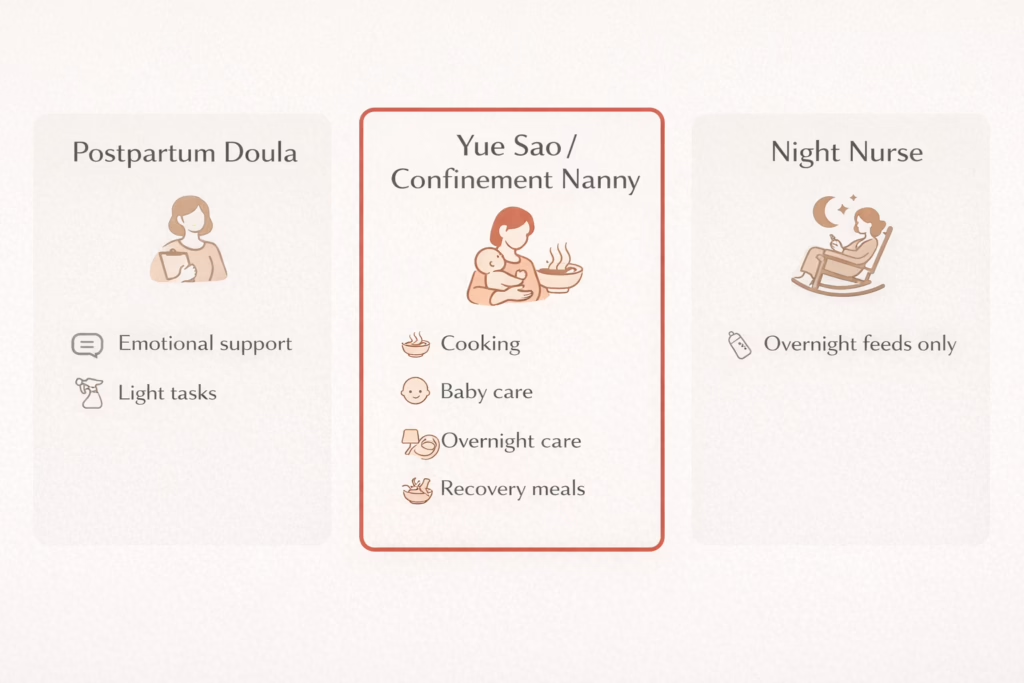
Families often ask how a yue sao compares to a postpartum doula, a night nurse, or a general nanny. The short answer: a yue sao combines elements of all three — but with a specialized focus on Chinese confinement recovery. Here is how they compare:
| Feature | Yue Sao | Postpartum Doula | Night Nurse | General Nanny |
|---|---|---|---|---|
| Live-in | Yes — 24/7 | No — visits only | Overnight only | Varies |
| Overnight newborn care | Yes — full coverage | No | Yes | Rarely |
| Confinement meal prep | Yes — 5–6 meals/day | No | No | No |
| Mother’s recovery support | Yes — physical + emotional | Yes — emotional focus | Limited | No |
| Breastfeeding guidance | Yes — practical support | Yes — education focus | Limited | No |
| Duration | 26–40+ days (live-in) | Weeks (visit-based) | Weeks–months (nightly) | Ongoing |
| Confinement expertise | Yes — trained in zuò yuè zi | No | No | No |
| Typical cost | $290–$430+ per day | $25–$65/hour | $25–$45/hour | $18–$35/hour |
Some families combine services — for example, hiring a yue sao for the first 30 days and transitioning to a night nurse for the second month. For a detailed breakdown, see our guide on the difference between a doula and a confinement nanny.
Families who need ongoing childcare after the confinement period ends often transition from a yue sao to a Chinese live-in nanny — a long-term caregiver focused on childcare and language immersion rather than postpartum recovery.
If you are still deciding which kind of help fits, our overview of postpartum nanny services compares the options side by side, from confinement care through to overnight support.
How the Hiring Process Works

Matching for a Chinese confinement nanny starts with the details that decide whether confinement will work in your home: the language you speak, how strictly you observe zuò yuè zi, and the food your family grew up with.
1
Share your needs
Give us your due date and city, how many days you want (26, 40 or 60+), whether you need a Mandarin or Cantonese speaker, and which confinement practices matter to you, from daily soups to visitor limits. Use our online form, call (626) 537-1191 or email cs@myasiannanny.com.
2
Review matched candidates
We shortlist confinement nannies from our vetted network whose language, cooking and experience fit your answers. Most families see 3–5 profiles within a week, each showing years of confinement work, languages, specialties such as twins or C-section recovery, and availability around your due date.
3
Interview and select
Interview your shortlist by phone or video in the language you share. Ask how she plans the first week of meals, how she handles night feeds and which confinement rules she expects you to keep, so nothing about the routine surprises you on day one.
4
Coordination and placement
Once you choose, we set her arrival around your due date and keep it flexible, because babies rarely come on the predicted day. If the birth is early or late, we move the start date with you.
From first contact to a confirmed nanny usually takes 2–4 weeks. Nannies with strong confinement cooking and fluent Mandarin or Cantonese are booked first, especially around the spring and fall birth peaks, so we recommend starting 3–6 months before your due date.
What a Chinese Confinement Nanny Costs
A Chinese confinement nanny costs $290–$430+ a day in every region, paid to the nanny for a live-in booking. Most families book 26 to 40 days. Within those bands, four things move the rate:
| Factor | How It Affects Pricing |
|---|---|
| Confinement experience | A nanny with more confinement placements behind her, including twins and C-section recoveries, sits toward the top of the band. |
| Language | Fluent Mandarin or Cantonese together with conversational English narrows the candidate pool and can raise the rate within the band. |
| Booking length | 26 days covers the core recovery weeks and 40 days the full traditional confinement; 60 days or more is common after a C-section. A longer booking costs more in total but can lower the day rate. |
| Meals | Newborn care only costs less than newborn care plus full confinement cooking. Families who want the full meal program, three meals and two to three soups a day, typically pay $390–$430+ a day. |
The confinement nanny cost guide works through full booking examples, and the postpartum care cost calculator totals a booking for your dates, referral fee included.
Our detailed guide to what a Chinese postpartum nanny costs covers packages, add-ons, and regional ranges.
Our Pricing Commitment
The day rate goes to your nanny. My Asian Nanny charges a $50 retainer (or $125 with a copy of a background check) for the candidate search, and once you book, a one-time referral fee of 10% of the total booking (minimum $850). We go through all three in the first conversation, before you commit, and our service fees page sets them out in full.
Ready to See Pricing for Your Family?
Share your due date, location, and care preferences. We send you a personalized cost estimate along with candidate profiles — usually within one week.
Who Hires a Chinese Confinement Nanny?
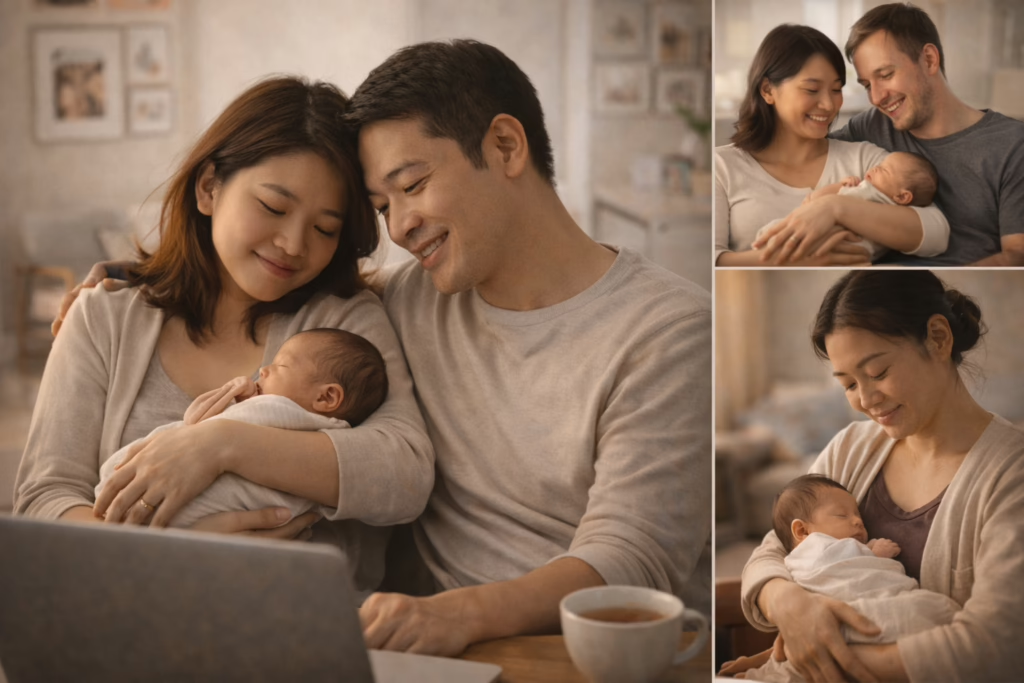
Most families who book a Chinese confinement nanny with us are in one of these six situations:
Grandparents who cannot fly in
Traditionally the mother’s own mother or mother-in-law ran the confinement month. When grandparents live overseas or cannot stay for six weeks, a confinement nanny takes over that role, cooking included.
C-section recoveries
After a cesarean, lifting the baby at 3 a.m. is the last thing you should be doing. Many of these families book 60 days so the nanny covers nights until the incision has healed.
Parents of twins or multiples
Two newborns mean two feeding schedules and twice the laundry. A confinement nanny keeps both babies on a shared routine and logs each one’s feeds separately.
Parents who managed alone the first time
Families who got through their first birth without help often book from day one for the second. The nanny stays with the newborn; an older child needs a separate caregiver.
Families keeping strict zuò yuè zi
Some families want the whole practice: warming meals from the first day, no cold drinks, limited visitors and two weeks at home. An experienced confinement nanny knows these rules and keeps them without being asked.
Families new to confinement
Plenty of our families did not grow up with zuò yuè zi. They hire a Chinese confinement nanny for the overnight care and the meals, and adopt as much of the tradition as suits them.
Good to Know
You do not need to be Chinese to hire a Chinese confinement nanny. My Asian Nanny is a referral agency and places nannies with families of every background, and many of our placements are with mixed-culture and non-Chinese families.
Not sure if we cover your area? See postpartum nanny near you for our full coverage map.
Frequently Asked Questions About Chinese Confinement Nannies
Can I choose a Mandarin- or Cantonese-speaking nanny?
Yes. Our roster is Mandarin- and Cantonese-speaking, and you can ask for either. Tell us during intake if you also need conversational English, since that narrows the candidate pool and can move the rate within the band. In Cantonese communities the role is often called a 陪月 (pui yuet); the work is the same.
Will she follow our family’s confinement rules?
Yes, and she will ask about them before she starts. Families differ on the details: some keep the traditional ban on hair washing and outings, while most shower daily in a warm bathroom and stay home only for the first two weeks. Agree on these points in the interview so her routine matches yours from day one.
What will she cook during confinement?
Three meals and two to three soups or teas a day, adjusted week by week. Expect millet congee, red date and ginger tea, sesame oil chicken, black chicken herbal soup and fish soups for milk supply, with dang gui introduced only after the first week. Tell her about allergies and any regional dishes you want, such as Cantonese pig’s feet with black vinegar.
How long do families usually book a Chinese confinement nanny?
Most book 26 to 40 days: 26 covers the core recovery weeks, 40 the full traditional confinement. After a C-section or with twins, 60 days or more is common, and you can extend during the booking if your nanny’s schedule allows. Our guide on how long to hire a confinement nanny goes through each option.
Does she look after our older child too?
No. Her job is the newborn and the mother’s recovery. If a toddler also needs care during confinement, book a separate caregiver; our nanny placement team can find one.
When should we book?
3–6 months before your due date. Nannies with strong confinement cooking and fluent Mandarin or Cantonese are the first to be booked, particularly around the spring and fall birth peaks. Late requests can still be matched, from a smaller pool.
What does the replacement guarantee cover?
Your confinement nanny placement is covered for the full length of your booking: if the match stops working, we find a new nanny at no additional referral fee. The 60–90 day figure on our site is the guarantee for nanny, housekeeper and elderly-care placements, 60 days in Southern California and 90 days elsewhere.
Chinese Confinement Nannies by City
Our Chinese postpartum nannies serve families nationwide. See local availability in popular metros:
- Chinese postpartum nanny in New York City
- Chinese postpartum nanny in San Francisco
- Chinese postpartum nanny in Los Angeles
- Chinese postpartum nanny in Houston
- Chinese postpartum nanny in Dallas
- Chinese postpartum nanny in Seattle
- Chinese postpartum nanny in Boston
- Chinese postpartum nanny in Atlanta
- Chinese postpartum nanny in Honolulu
- See all service areas →
Not sure which type of care you need?
Postpartum nanny, night nurse, baby nurse, doula — the roles overlap more than most sites admit. Compare all postpartum care options →
Your Family Deserves Real Support — Not Just Advice
Guides like this one can prepare you for confinement, but they cannot cook the soups or take the 3 a.m. feed. A Chinese confinement nanny does both, and gives the month the structure your parents’ generation relied on.
Families tell us the difference shows by the second week: the mother is sleeping in four- to six-hour stretches, eating properly, and has time to get to know her baby instead of just getting through the day.
If you are expecting, starting a match takes about 15 minutes, and your placement is covered by our replacement guarantee from the day your nanny arrives.
Start Your Matching Process Today
Share your due date, location and preferences. We match you with experienced, background-checked Chinese confinement nannies; most families receive candidate profiles within one week. 60-90 day replacement guarantee. Families nationwide.
What Families Are Saying
Real reviews from Google and Yelp — trusted by 1,000+ families since 2011